
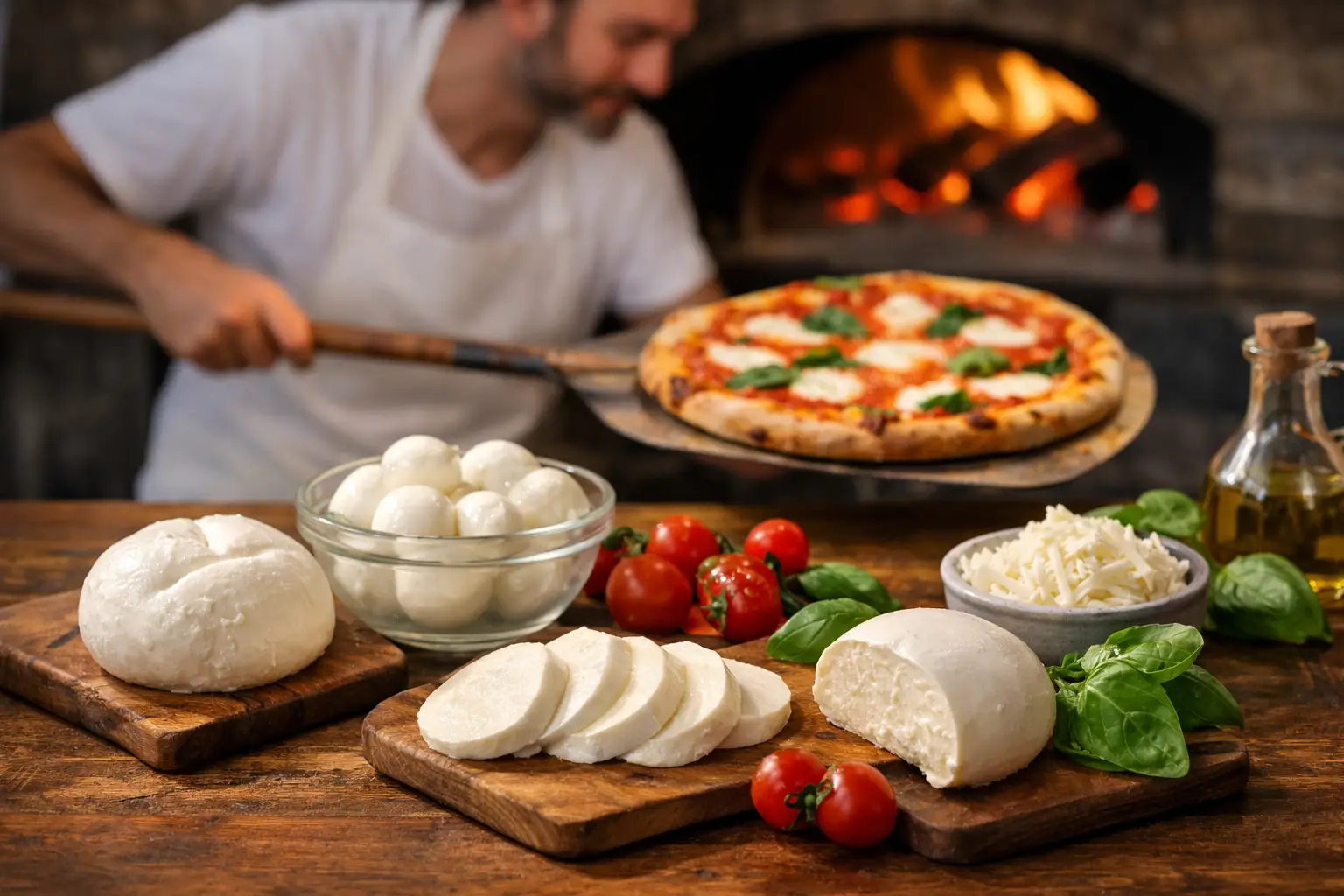
If your pizza is coming out with pale puddles, burnt spots of whey, or a slick layer of oil, the dough may not be the real problem. In many cases, the best mozzarella for pizza is not the most expensive cheese or the most authentic-sounding label. It is the mozzarella that matches your pizza style, your bake temperature, and the amount of moisture your oven setup can handle.
That distinction matters more than most cooks realize. Mozzarella is not one thing. Fresh mozzarella, low-moisture mozzarella, mozzarella di bufala, fior di latte, and part-skim block mozzarella all behave differently in the oven. For a serious pizza maker, choosing cheese is not a finishing touch. It is part of the technical system, just like fermentation, dough strength, and heat management.
What is the best mozzarella for pizza?
For most pizzas, the best mozzarella for pizza depends on the style you are making.
If you are baking true Neapolitan pizza at very high heat, fior di latte is often the most dependable choice. It melts cleanly, carries a balanced dairy flavor, and releases less water than buffalo mozzarella. If you are working in a home oven, especially one that bakes longer than a wood-fired oven, low-moisture whole milk mozzarella is often the better performer because it browns evenly and keeps the center from turning wet. Buffalo mozzarella can be excellent, but only when handled carefully and used in the right quantity.
This is where many pizzas go off track. People buy cheese by reputation instead of by performance. The result is usually predictable - too much moisture, uneven melt, or a pizza that tastes rich but bakes poorly.
Why mozzarella choice changes the finished pizza
On pizza, cheese has to do several jobs at once. It must melt before the crust overbakes, distribute fat and dairy flavor without suffocating the dough, and release some moisture without flooding the surface. That balance changes with oven temperature.
In a Neapolitan oven, the pizza may bake in 60 to 90 seconds. In that environment, a fresh mozzarella can work beautifully because the exposure time is short. The cheese softens and warms through without spending long enough in the oven to dump excessive water.
In a standard home oven, a pizza often bakes for 5 to 8 minutes or more. That extra time changes everything. A mozzarella that looks ideal at purchase can separate, blister harshly, or soak the center before the crust is fully baked. This is why there is no single universal winner. There is only the right mozzarella for your process.
Fresh vs low-moisture mozzarella
This is the most useful distinction for most pizza makers.
Fresh mozzarella has a soft texture, high moisture content, and a clean dairy flavor. It is excellent when you want tenderness, lighter richness, and a more traditional Neapolitan profile. But it demands restraint. If you apply too much, or if you place it on a pizza without draining it properly, the excess whey can pool across the center and interfere with oven spring.
Low-moisture mozzarella is firmer, saltier, and more stable in longer bakes. It shreds or slices easily, browns more readily, and gives the familiar stretch many American pizza eaters expect. It is less delicate than fresh mozzarella, but it is often more reliable in deck ovens, conveyor ovens, and home ovens.
For a school focused on authentic Neapolitan standards, the distinction is not about prestige. It is about suitability. A cheese can be excellent in itself and still be wrong for the pizza you are making.
Fior di latte: the Neapolitan standard for many pizzaiolos
Fior di latte is a cow's milk fresh mozzarella and, in practical terms, it is often the most balanced option for Neapolitan pizza. It brings freshness without the intense moisture load of buffalo mozzarella. It also tends to have a mild, cultured milk flavor that supports the tomato rather than competing with it.
When properly drained and cut, fior di latte gives a soft, creamy melt with enough structure to stay in place during a fast bake. That matters on a pizza where topping balance is central. Neapolitan pizza is not built to carry a heavy cheese blanket. The dough, tomato, cheese, oil, and basil should remain in proportion.
If you are making Margherita in the traditional spirit, fior di latte is often the most practical and technically sound answer.
Buffalo mozzarella: excellent, but not automatic
Mozzarella di bufala has prestige for good reason. It offers a deeper tang, richer aroma, and luxurious texture that can be extraordinary on pizza. But it is not automatically the best mozzarella for pizza in every setting.
Its moisture content is the main challenge. In a very hot oven with disciplined topping control, buffalo mozzarella can produce a remarkable result. In a slower oven, or in the hands of someone who uses too much, it can leave the pizza wet and structurally weak.
The usual fix is simple but important. Drain it well, tear or cut it into smaller pieces, and give it time to shed excess liquid before topping the pizza. Some pizzaiolos also use it sparingly or add it later in the bake depending on the oven and style.
Buffalo mozzarella is best understood as a high-reward ingredient with a narrower margin for error.
Low-moisture whole milk mozzarella for home ovens
If you are baking on steel or stone in a typical American home oven, low-moisture whole milk mozzarella deserves serious respect. It may not sound romantic, but it solves real problems.
It melts consistently, covers the pizza evenly, and is much easier to control. It also tolerates longer bake times better than fresh mozzarella. For New York-style pies, pan pizzas, and many hybrid home-baked pizzas, it is often the strongest choice.
Whole milk versions generally provide better flavor and texture than part-skim. Part-skim can work, especially in commercial settings where consistency and cost matter, but it tends to melt a little tighter and taste less rounded. If your goal is quality at home, whole milk usually performs better.
How to tell if a mozzarella is right for your pizza
The label helps, but the bake tells the truth. Good pizza mozzarella should melt into distinct, creamy pools or an even layer depending on how it is cut and applied. It should not release so much liquid that the tomato turns soupy. It should not break into oil so aggressively that the surface looks greasy before the rim finishes coloring.
Texture matters before baking too. Fresh mozzarella should feel supple, not rubbery. Low-moisture mozzarella should feel firm but not dry or chalky. Aroma should be clean and milky, never sour in a harsh way.
Salt level is another factor many people overlook. A more salted mozzarella can improve overall balance on a pizza with restrained toppings. A lightly salted cheese may work better if the tomato sauce and finishing cheese already bring enough salinity.
Common mistakes when choosing mozzarella
The first mistake is assuming more cheese means a better pizza. On Neapolitan pizza especially, excess mozzarella suppresses the dough and disrupts balance. The second is using fresh mozzarella straight from the package without draining. The third is judging cheese quality only by how it tastes cold.
Pizza is a cooked system. Some cheeses that taste wonderful on a board perform poorly at 800 degrees. Others seem ordinary until they hit the oven and become exactly what the pizza needs.
Pre-shredded mozzarella is another mixed case. It is convenient, but anti-caking agents can affect melt and texture. For a casual weeknight bake, it may be acceptable. For serious work, block cheese that you cut or shred yourself usually gives a cleaner result.
Best mozzarella for pizza by style
For Neapolitan pizza, fior di latte is often the safest first choice, with buffalo mozzarella reserved for ovens and workflows that can manage its moisture. For New York-style pizza, low-moisture whole milk mozzarella is the standard because it browns well and supports a longer bake. For pan pizza or Detroit-style pizza, low-moisture mozzarella is also a strong fit because of its structure and caramelization potential.
For home cooks trying to approximate Neapolitan pizza in a conventional oven, the answer depends on your setup. If your oven runs hot and your bake is fast, drained fresh mozzarella may work. If your bake runs longer, a restrained amount of low-moisture whole milk mozzarella often gives a better final pizza, even if it is less traditional on paper.
That is the central lesson. Tradition matters, but execution matters more. At Neapolitan Pizza School, this is the kind of decision we treat as technical rather than decorative.
A practical standard to follow
If you want one dependable starting point, use well-drained fior di latte for high-heat Neapolitan pizza and low-moisture whole milk mozzarella for home oven pizzas. Then adjust based on your bake time, your sauce moisture, and how much cheese you are applying.
A serious pizza maker learns to read cause and effect. If the center stays wet, reduce moisture or quantity. If the cheese browns too fast, change the cut, placement, or cheese type. If the pizza feels heavy, the issue may not be the dough at all.
The best mozzarella for pizza is the one that respects the style, supports the bake, and leaves room for the crust to speak. Start there, and your pizzas will get cleaner, more balanced, and far more consistent.