
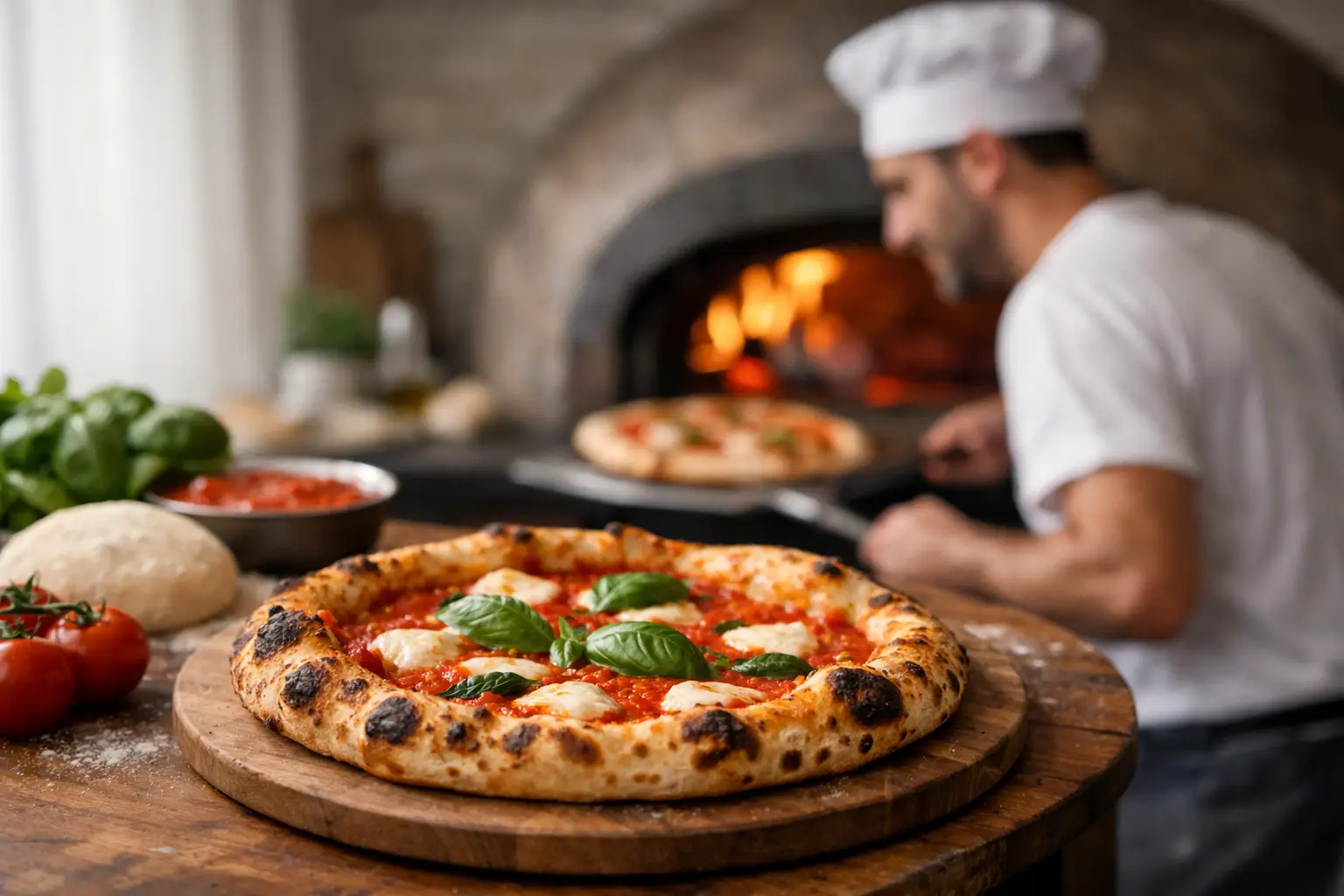
A blistered rim, soft center, and balanced char can make home pizza feel out of reach. So, can you make Neapolitan pizza at home? Yes - but only if you stop treating it like standard homemade pizza and start respecting the specific conditions that define the style.
That distinction matters. Neapolitan pizza is not just thin pizza cooked hot. It relies on a particular dough structure, controlled fermentation, restrained topping application, skilled shaping, and intense oven heat. At home, the question is less whether it is possible and more how closely you can reproduce the essential characteristics with the equipment you actually have.
What makes Neapolitan pizza different
A true Neapolitan pizza is built on simplicity, but simplicity is not the same as ease. The dough is usually made from flour, water, salt, and yeast. No sugar. No oil in the dough. The crust should be tender and extensible, not cracker-crisp or bread-like. The cornicione should rise dramatically, while the center stays thin, soft, and flexible.
This style is also defined by speed. In a proper wood-fired oven, the pizza bakes in roughly 60 to 90 seconds at very high temperatures. That rapid bake creates a specific contrast - leopard spotting on the crust, a moist interior crumb, and toppings that cook just enough without drying out.
When home cooks struggle, it is usually because they borrow methods from other pizza styles. They overwork the dough, overload the toppings, or bake too cool for too long. The result may still be good pizza, but it will not express the texture and balance associated with Neapolitan tradition.
Can you make Neapolitan pizza at home with standard equipment?
You can make Neapolitan pizza at home, but the result depends heavily on your oven setup. A standard residential oven in the US typically tops out around 500 to 550 degrees Fahrenheit. That is well below the heat of a traditional Neapolitan oven. Because of that gap, your home version may come very close in dough character and topping balance while still falling short in bake speed and crust development.
That does not mean the effort is pointless. It means you need realistic targets. If your goal is a fully authentic bake identical to one produced in a wood-fired dome oven, standard home equipment creates limits. If your goal is to produce a pizza with strong Neapolitan character - soft, airy rim, thin center, restrained topping load, and proper fermentation - then yes, you can get there.
A baking steel, baking stone, broiler-assisted bake, or a specialized countertop pizza oven can all improve results. Each tool changes the ceiling of what is possible. A steel usually gives stronger bottom heat than a stone in a home oven. A dedicated high-heat pizza oven gets you much closer to the rapid oven spring and char that define the style. The trade-off is cost, learning curve, and, in some cases, outdoor-only use.
Dough is where most home results are won or lost
If the dough is wrong, the rest of the process cannot rescue it. Home bakers often focus on the oven first, but dough management deserves equal attention.
For Neapolitan pizza, hydration, flour strength, mixing, and fermentation all need to work together. A dough that is too dry will resist stretching and bake up dense. A dough that is too wet for your skill level may tear, stick, and lose structure. Fermentation that is too short produces a tight, underdeveloped crust. Fermentation that goes too far can leave the dough slack and difficult to handle.
The right dough should feel alive but controlled. It should open with minimal force and retain gas in the rim. That depends on proper gluten development, but also on knowing when to stop mixing. Many home bakers chase a perfectly smooth dough and accidentally warm it too much or over-tighten it. Neapolitan dough should be developed enough to hold shape, but not treated like an industrial bread dough.
Balling is another overlooked step. A well-formed dough ball creates surface tension, encourages even expansion, and makes final shaping more predictable. Poorly balled dough often spreads unevenly or bakes with irregular structure.
Fermentation matters more than most recipes admit
Time is one of the main ingredients in Neapolitan pizza. Fermentation affects extensibility, flavor, digestibility, and browning. It is also where many home recipes become vague, which is why results vary so widely.
Room temperature, dough temperature, yeast quantity, and flour choice all affect timing. A formula that works in one kitchen may overproof in another. That is why serious pizza makers learn to read the dough, not just the clock.
If the dough feels tight and snaps back aggressively, it likely needs more time. If it feels fragile, overly gassy, and hard to handle cleanly, it may be beyond its ideal window. The point is not to hit a trendy fermentation number. The point is to produce dough that opens cleanly, bakes with lift, and retains tenderness.
This is where disciplined instruction matters. Once you understand fermentation as a system rather than a recipe line, your consistency improves dramatically.
Shaping by hand is part of the style
One of the clearest signs of Neapolitan pizza is the hand-opened disk. Rolling pins press out the gas you need in the rim and flatten the dough into a uniform sheet. That may be useful in other styles, but not here.
Hand shaping requires confidence and restraint. You press from the center outward, preserving the outer edge. You stretch the dough without tearing the gluten network. You aim for a thin center that still supports the toppings and a rim that has enough trapped gas to rise rapidly in the oven.
This is a tactile skill. Videos and recipes help, but repetition matters. A dough can be perfectly fermented and still be mishandled at the bench. That is often the difference between pizza that looks technically correct and pizza that feels truly alive after baking.
Toppings should support the dough, not bury it
Neapolitan pizza is not designed for excess. The dough is delicate, the bake is fast, and the topping load must stay balanced. Too much sauce or cheese will weigh down the center and interfere with proper baking.
Tomato should be bright and clean, not heavily seasoned into a pasta sauce. Mozzarella should be used with attention to moisture. If it releases too much water during baking, the center can turn soupy. Basil, olive oil, and a few well-chosen ingredients are usually enough.
This restraint is not about minimalism for its own sake. It is about preserving the structure and identity of the pizza. In Neapolitan tradition, the crust, sauce, cheese, and heat are meant to work in proportion.
The oven question: heat, floor, and live-fire expectations
The hardest part of making Neapolitan pizza at home is not mixing dough. It is generating and managing enough heat.
A proper Neapolitan bake depends on intense top and bottom heat working at the same time. In many home ovens, one side lags behind the other. You may get decent browning underneath but pale crust on top, or the reverse. That imbalance forces longer bake times, which dries the dough and changes the final texture.
If you use a home oven, preheating thoroughly is essential. Not ten minutes. Often an hour or more for the baking surface to saturate with heat. Positioning also matters. Some setups benefit from a steel near the top of the oven with the broiler used strategically at the end. Others do better with a lower bake and careful turning.
Countertop pizza ovens narrow the gap significantly. They can deliver the heat needed for faster oven spring and more characteristic spotting. But high heat alone is not enough. You still need proper launch technique, dough maturity, and topping control. Equipment helps, but it does not replace craft.
So, can you make Neapolitan pizza at home and have it be authentic?
You can make a highly credible Neapolitan pizza at home, especially if you are willing to develop both dough skill and heat management. Whether it is fully authentic depends on how strictly you define authenticity.
If authenticity means every condition matches a traditional pizzeria environment, then most home kitchens fall short. If authenticity means honoring the core method - proper dough composition, fermentation, hand shaping, restrained topping use, and a fast, high-heat bake as close as your setup allows - then home production can absolutely reflect the tradition in a serious way.
That is the standard worth pursuing. Not a shortcut version, and not a social-media version built around visual tricks. Real progress comes from understanding why the dough behaves the way it does, why the oven matters, and why small technical errors produce big changes in the final pizza.
For anyone serious about the craft, home pizza is not a compromise. It is a training ground. With disciplined practice, the gap between home production and professional execution gets much smaller - and the process teaches you to see Neapolitan pizza not as a recipe, but as a system worth learning well.