
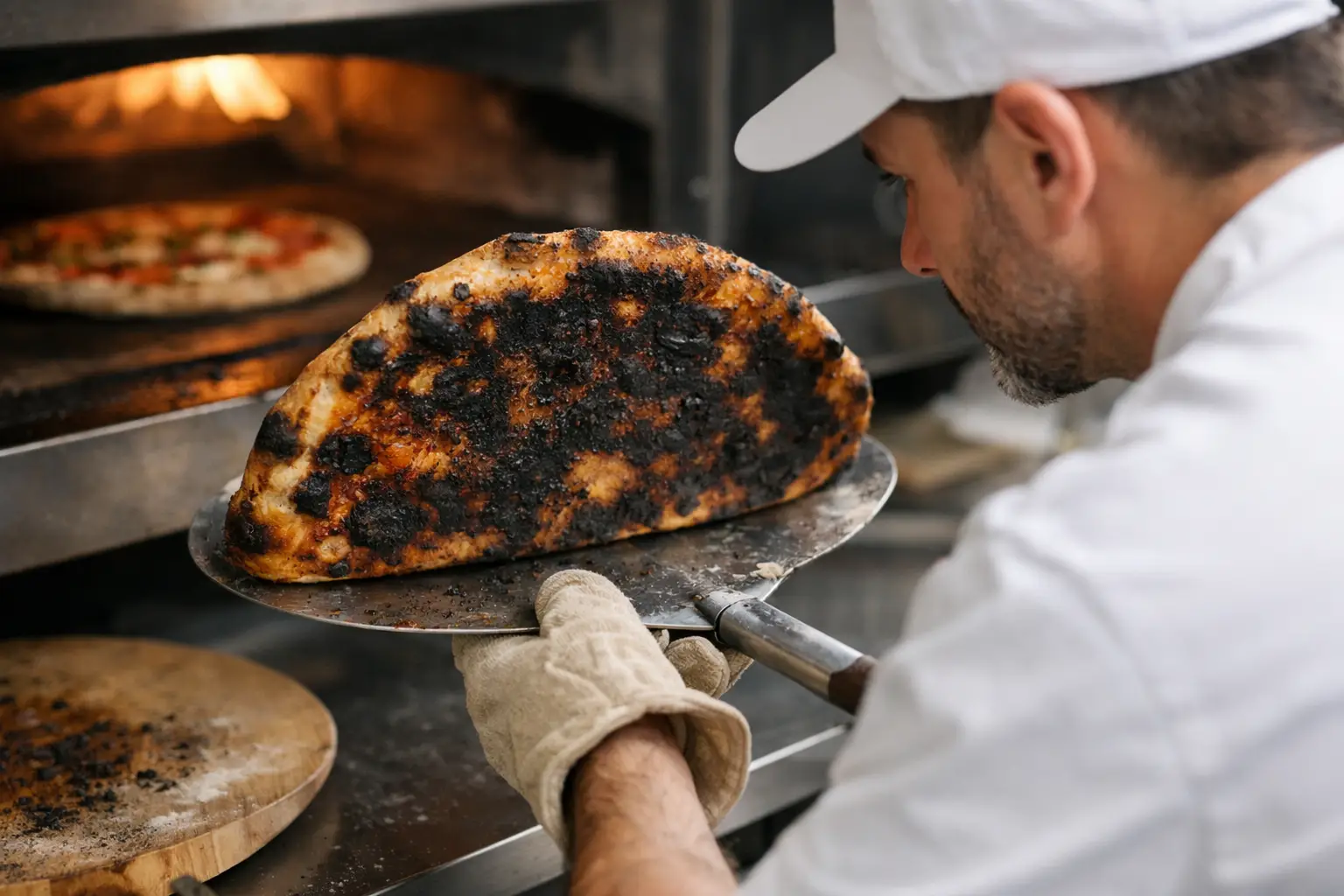
A Neapolitan pizza can leave the oven with a beautifully risen cornicione, supple center, and vivid leopard spotting - yet still be compromised by burnt pizza bottoms. This is rarely one isolated mistake. It is usually a signal that the relationship between floor heat, dome heat, dough, flour, and bake time is out of balance.
A dark underside is not automatically a failure. In a properly managed high-heat oven, the base should show color, small toasted spots, and a dry, structured finish that supports the pizza without becoming hard. The problem begins when that color becomes bitter blackening, dense scorching, or an acrid flavor that overwhelms the dough and toppings.
The Difference Between Char and a Burnt Base
Neapolitan pizza is baked at temperatures that would destroy many other styles of pizza. That intensity is intentional. A short bake allows the dough to expand quickly, the rim to blister, and the toppings to cook before the interior dries out. Some spotting on the underside is expected.
Burning occurs when the pizza floor receives more energy than the upper part of the oven can match. The base sets and darkens too quickly while the top remains pale, the cheese is under-melted, or the rim needs more time. Extending the bake to finish the top only makes the bottom worse.
The goal is not a uniformly blond crust. It is a balanced bake: developed color below, full expansion at the rim, properly cooked toppings, and no harsh burnt flavor. That balance depends on reading the oven rather than relying on a single temperature number.
Why Burnt Pizza Bottoms Happen
The oven floor is too hot
The most common cause is excessive floor temperature. The baking floor stores heat, and it can remain aggressive even after the dome and oven chamber appear to be operating normally. This often happens after a long firing period, after baking several pizzas in one area, or when a wood-fired oven has been heavily stoked without enough recovery time.
A laser thermometer can help establish a reference point, but it does not replace judgment. Floor temperature can vary considerably across a small oven, particularly near the fire. A reading taken in the center does not describe the temperature at the front, side, or flame-facing quadrant where the pizza may actually land.
If the bottom blackens before the cornicione and toppings are finished, move the pizza to a cooler portion of the floor for the next bake. In a wood-fired oven, that may mean baking farther from the fire or allowing the deck to settle before launching again. In a gas or electric pizza oven, it may require lowering bottom heat, reducing deck temperature, or adjusting the balance between top and bottom elements.
The dome heat is too weak for the deck heat
A pizza oven is not governed by floor heat alone. The dome, flame, and upper heating system provide radiant energy that cooks the top surface and encourages oven spring. When that upper heat is insufficient, the pizza stays on the floor too long.
This is why a pizza can burn underneath even when the floor temperature does not seem excessive. A weak flame, underheated dome, improperly positioned gas burner, or open oven door can reduce top-side cooking. The baker then waits for the cheese to melt and the rim to finish, while the base continues absorbing heat.
Correcting this problem is not always about lowering the floor. Sometimes the right adjustment is to strengthen or restore upper heat so the pizza bakes in its intended time. Neapolitan pizza requires a coordinated heat environment, not simply a hot surface.
Excess bench flour is burning beneath the pizza
Flour burns faster than dough. A pizza may have a properly baked base but still taste bitter because a layer of loose flour has scorched beneath it. This is especially common when shaping on a heavily floured bench, loading with excessive semolina, or launching after repeated adjustments on the peel.
Use only enough bench flour to prevent sticking. Shake the dough gently before topping to remove excess, then check the underside once more before launching. On the peel, work with purpose. The longer a topped pizza sits in flour, the more it absorbs loose particles and the greater the chance those particles will travel into the oven.
Flour choice also matters. Fine flour can burn rapidly in a high-temperature oven. Semolina or rice flour may improve handling in some workflows, but neither is permission to over-flour. Every flour left beneath the pizza becomes fuel for a bitter underside.
The oven floor is dirty
Burnt flour, cheese, sauce, and carbonized debris create hot, bitter contact points. A clean deck is part of bake management, not an afterthought between service periods.
Brush the floor regularly with a proper oven brush, particularly after a failed launch or a pizza that has deposited flour. In a wood-fired oven, manage embers and ash so they do not migrate into the baking area. In any oven, avoid launching over visible debris. A clean floor produces clearer flavor and gives more reliable feedback about the actual bake.
The dough and topping load are slowing the bake
Dough condition can contribute to a burnt base, even though the floor is where the damage appears. Under-fermented dough may resist expansion and require more time to bake through. Dough that is too cold at launch can also slow the bake. Very wet toppings, excessive sauce, thick cheese coverage, or overloaded ingredients may leave the center undercooked while the base continues to darken.
For Neapolitan pizza, restraint is technical. Use a topping quantity that can cook within the oven's short bake window. Drain wet ingredients, apply sauce with a light hand, and avoid treating a high-heat pizza as though it were a long-baked pan pizza.
Diagnose the Pattern Before Changing Everything
The appearance of the pizza gives useful clues. If the entire base is too dark but the top is pale, suspect a floor-to-dome imbalance. If the bottom has scattered black patches and a bitter flavor, look first for flour or debris. If only one side burns repeatedly, the issue is likely a hot zone, often near the fire or burner.
A pizza that burns underneath after sitting too long on the peel may point to excessive flour and a slow launch. A pizza with a dark base and a wet center may need lighter toppings, better dough readiness, or stronger upper heat. Do not change fermentation, flour, hydration, oven settings, and topping quantity all at once. Make one informed adjustment, then assess the next bake.
Keeping brief notes is valuable, especially for aspiring pizzaiolos developing a repeatable process. Record floor temperature, oven setup, dough age, dough temperature, launch position, bake time, and the result. Over several sessions, those observations reveal patterns that memory alone tends to miss.
A Better Workflow for High-Heat Baking
Before baking, establish an active flame or sufficient upper heat and allow the oven floor to equalize. Do not judge readiness solely by the last fuel addition. Brush the intended baking zone, check the floor in more than one location, and identify the coolest practical area for the first launch if the oven has been firing hard.
Shape the dough efficiently with minimal flour. Once topped, give the pizza a short shake on the peel to confirm it is free. If it sticks, lift and dust only the affected area rather than adding a blanket of flour. Launch decisively, then begin turning as soon as the edge facing the fire has set enough to move.
Turning protects the rim and top from uneven radiant heat, but it also lets you control where the base contacts the floor. If one area is clearly too aggressive, move the pizza during the bake rather than leaving it in place out of habit. A skilled baker does not merely rotate a pizza. They manage its exposure to distinct heat zones.
Between pizzas, clean the floor and reassess. Consecutive bakes can raise or lower effective deck heat depending on oven design, pizza size, fuel management, and the area used. A busy service demands constant adjustment, not a fixed setting established at the beginning of the night.
When a Darker Base Is Acceptable
Some variation is natural, and a home pizza oven may produce a different pattern from a traditional wood-fired oven. The standard should be flavor and structure, not a photograph of someone else's pizza. A base with deep brown spotting can be excellent if it remains crisp-tender, does not taste bitter, and supports a fully baked pizza.
What should not be accepted is a base that is black across large areas, crumbly from overbaking, or so bitter that it distracts from the fermentation and toppings. Authentic technique is disciplined rather than rigid. It responds to the oven in front of you.
The next time a pizza comes out with an overly dark underside, resist the urge to call it simply "too hot." Read the whole bake. The floor, dome, flour, dough, and launch all leave evidence on the finished pizza, and learning to interpret that evidence is what turns repeated practice into command of the craft.