
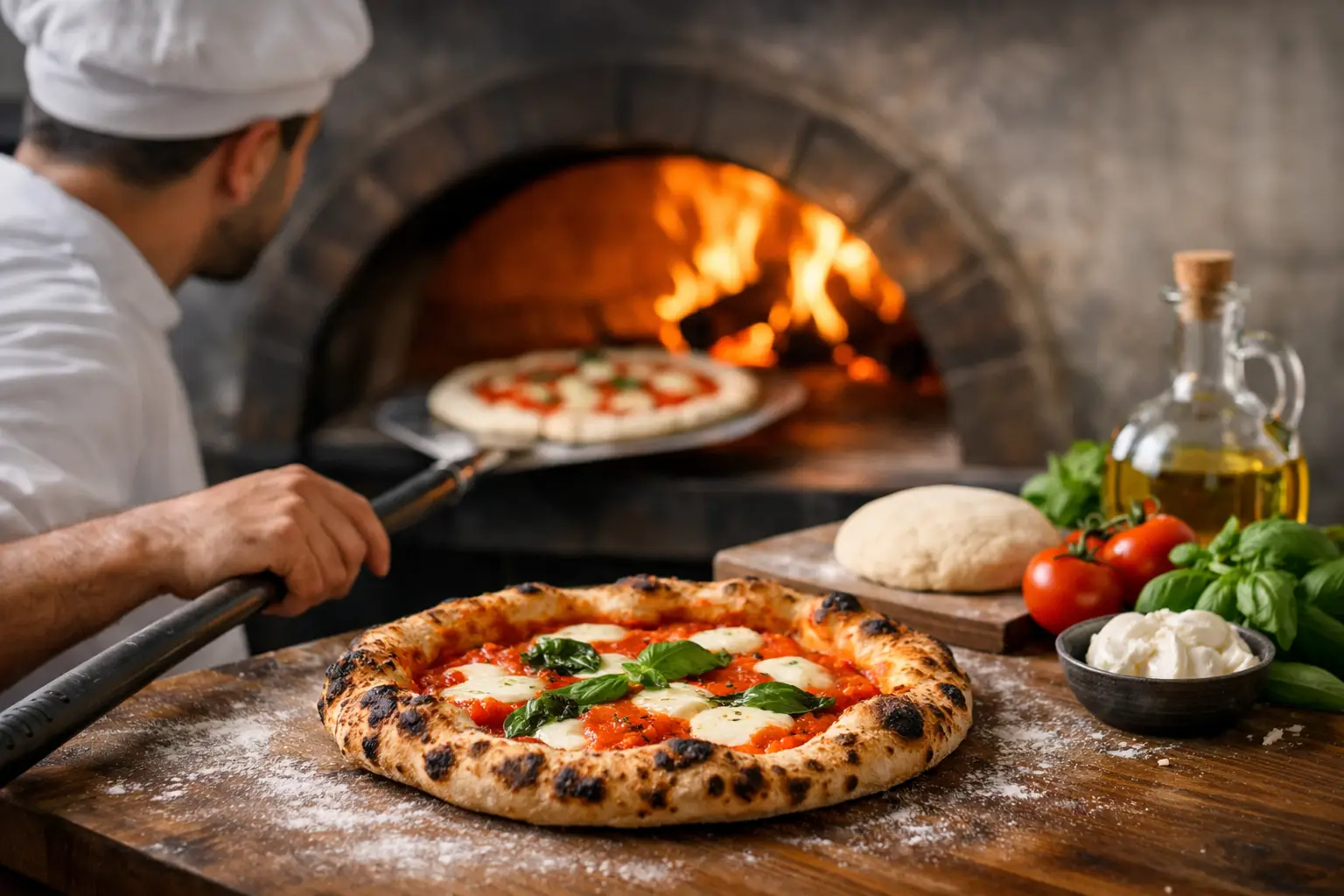
A true Neapolitan pizza is decided in under 90 seconds, but the neapolitan pizza method of cooking begins long before the dough meets the oven floor. What most people notice first is the leopard spotting, the raised rim, and the soft center. What they often miss is that this style depends on a tightly connected system of choices - flour strength, hydration, fermentation, dough handling, topping restraint, and extreme heat working together.
That is why Neapolitan pizza is not simply a recipe. It is a method. If one part is pushed too far or handled carelessly, the final pizza loses the balance that defines the style. For serious home cooks, aspiring pizzaiolos, and operators building a credible pizza program, understanding the method matters more than memorizing ingredient amounts.
What the Neapolitan pizza method of cooking really means
The defining feature of the Neapolitan pizza method of cooking is fast baking at very high heat with a dough designed specifically for that environment. This is not a thick-crust system, and it is not a low-and-slow bake. The dough must be extensible enough to open without tearing, structured enough to rise properly in the oven, and fermented enough to produce aroma and digestibility without collapsing.
The bake itself is equally specific. A Neapolitan pizza is traditionally baked on the floor of a very hot oven, where conductive heat from below and radiant heat from above finish the pizza almost simultaneously. That relationship is essential. If the bottom cooks too slowly, the pizza dries before the rim develops. If the top cooks too slowly, the cheese and sauce overheat while the crust hardens.
In practical terms, the method is about synchronization. Dough, toppings, shaping, and oven conditions all have to agree with each other.
Dough design comes first
The dough used for Neapolitan pizza is lean, simple, and unforgiving in the best sense of the word. Flour, water, salt, and yeast are enough, but simplicity raises the standard for execution. There is no fat or sugar to hide poor fermentation or weak structure.
Flour choice matters because the dough has to survive fermentation, opening, topping, and a violent bake without becoming tough. A suitable flour supports elasticity and gas retention, but it cannot be so strong that the dough resists shaping or bakes up heavy. This is where many American bakers run into trouble. They assume stronger flour automatically means better pizza. In Neapolitan production, that is not always true.
Hydration also needs discipline. Too little water and the dough lacks expansion and tenderness. Too much and it becomes difficult to manage, especially for students still learning touch and tension. The right hydration level depends on flour, room temperature, fermentation schedule, and oven performance. There is no serious approach to this style that ignores those variables.
Fermentation is where character develops
Fermentation gives the dough more than volume. It creates aroma, affects browning, improves handling, and influences how the crumb opens during the bake. Underfermented dough tends to feel tight, bake pale, and eat heavy. Overfermented dough may spread too easily, lose strength, and become difficult to launch cleanly.
This is one of the reasons Neapolitan pizza rewards process control. Time and temperature are not background details. They are active ingredients. A dough fermented well will open with less force, hold gas more evenly in the cornicione, and bake with a softer interior structure.
Balling is part of that process, not a separate step. A properly formed dough ball creates surface tension and helps organize the final shape. Weak balling often leads to uneven rims, irregular spring, and poor oven performance.
Shaping is not just flattening dough
In the neapolitan pizza method of cooking, shaping protects the gases developed during fermentation. The goal is not to press the dough into submission. It is to guide those gases outward so the rim can expand while the center remains thin enough to bake quickly.
This is why rolling pins do not belong in authentic Neapolitan production. They compress the dough too aggressively and erase the internal structure that gives the crust its light edge. Hand shaping preserves that structure while allowing the pizzaiolo to control thickness and diameter.
Good shaping also determines how the pizza will bake. A center left too thick can stay gummy in a short bake. A rim degassed too much will not rise correctly. An uneven disk can char on one side while remaining underdone on the other. These are not cosmetic errors. They are technical signs that the method has been interrupted.
Topping balance is part of the cooking method
One of the most common mistakes in American pizza making is treating toppings as decoration or abundance. Neapolitan pizza demands restraint. The dough is delicate, the bake is brief, and the structure is built for balance rather than load-bearing.
Sauce must be applied lightly enough to avoid soaking the center yet fully enough to support the flavor profile. Cheese must melt cleanly without releasing excess moisture or grease. Oils, basil, and other finishing components should complement the dough and tomato, not compete with them.
This is why authentic Neapolitan pizza often appears simple. Simplicity here is not lack of ambition. It is technical discipline. Every topping added changes moisture, weight, and thermal behavior. Once you understand that, topping choices become part of the cooking system rather than an afterthought.
The oven defines the bake
If there is one area where the Neapolitan method is hardest to fake, it is the oven. Traditional Neapolitan pizza relies on a very hot baking environment, usually wood-fired, where the floor and dome create the specific heat transfer needed for rapid oven spring and controlled charring.
That does not mean only one fuel source can produce credible results. Gas and modern commercial ovens can perform well if they reach the necessary heat and provide the right balance between top and bottom cooking. What matters is not nostalgia alone. It is thermal behavior.
High heat changes everything
At Neapolitan temperatures, the dough expands quickly, moisture evaporates rapidly, and the rim develops characteristic spotting before the crumb dries out. The sauce stays bright rather than stewed. The cheese softens and integrates rather than baking into a thick blanket. The crust remains tender enough to fold, with enough structure to hold its shape.
Lower-temperature ovens can still make good pizza, but they produce a different result. The dough formula often has to change. Topping amounts may need adjustment. Bake time extends, which alters texture and flavor. That is not a failure. It is simply no longer the same method.
Oven management requires active judgment
Operating a high-heat pizza oven is not passive work. Floor temperature, flame position, recovery time, and pizza placement all affect the result. A skilled pizzaiolo reads the oven continuously. One area may be too aggressive on the bottom, another too weak on the dome side. Rotating the pizza at the right time becomes essential.
This is where experience separates theory from execution. Many students can make a strong dough. Fewer can manage live heat with consistency over service. The method demands both.
Why consistency is difficult
Neapolitan pizza looks simple from across the counter, but it is one of the more exacting dough systems in practical food production. Small changes show up fast. A warmer room shortens fermentation. A different flour absorbs water differently. A cooler dough may resist opening. A heavily topped pizza may stall in the center during the bake.
For home cooks, the challenge is usually equipment and environmental control. For professionals, it is repeatability under pressure. The solution in both cases is the same: stop treating each step as isolated. The dough formula, fermentation plan, shaping technique, and oven strategy must be built together.
That is the educational value of a specialized training environment. A school focused only on this craft can show not just what to do, but why one adjustment upstream changes the bake downstream. Neapolitan Pizza School exists in that exact space, where craft standards and practical execution meet.
What authenticity actually asks of you
Authenticity in Neapolitan pizza is often misunderstood as rigid imitation. Serious practitioners know it is more disciplined than that. Authenticity means respecting the logic of the style. It means understanding why the dough is mixed this way, why the fermentation is paced this way, why the pizza is topped lightly, and why the bake is so short and so hot.
It also means accepting trade-offs. A soft center is not a flaw in this style. Sparse toppings are not stinginess. Rapid baking is not impatience. These characteristics are part of the identity of the pizza.
That does not prevent adaptation, especially in American kitchens with different flour supplies, climates, and oven setups. But adaptation should be informed. Once you start changing heat, fermentation, or topping load, you are making decisions that move the pizza closer to or farther from the Neapolitan standard.
The better question is not whether a pizza looks authentic in a photo. It is whether your process respects the method well enough to produce the texture, flavor, and structure that define the style. When you approach it that way, every bake becomes more useful. Every variable teaches you something. And that is how real progress happens in pizza making.