
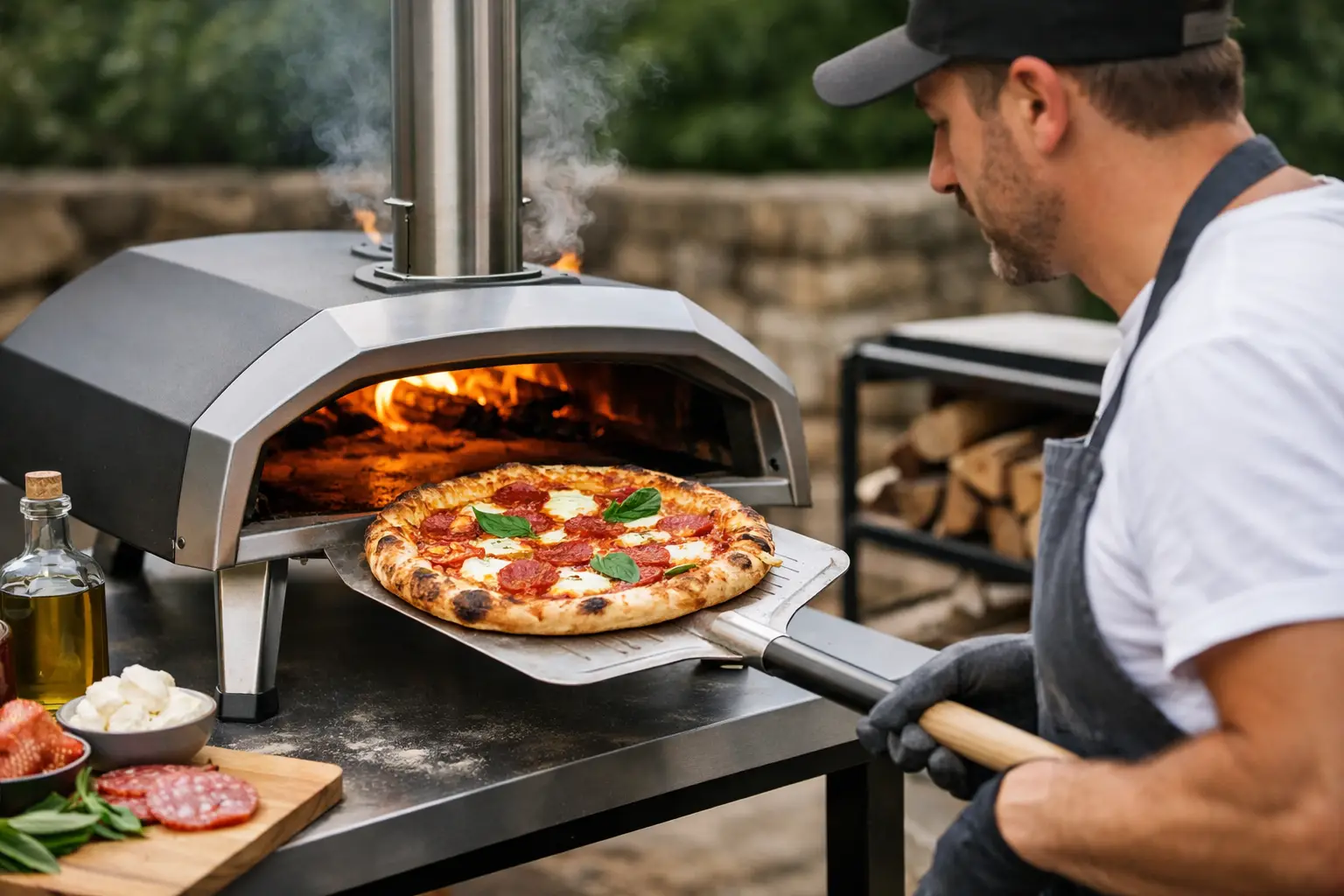
A serious Ooni Karu pizza review should begin with the question that matters most: can this compact outdoor oven produce pizza with the rapid bake, tender cornicione, and balanced leopard spotting associated with Neapolitan technique? The answer is yes, with a condition. The Karu can reach the required heat range, but it does not remove the need for disciplined dough, thoughtful fuel management, and close attention at the peel.
For a committed home pizzaiolo, the Karu platform is far more than a backyard novelty. Its multi-fuel design offers meaningful flexibility, its stone deck can bake a pizza in roughly 60 to 90 seconds under proper conditions, and its live flame creates the visual and textural character many home ovens cannot approach. At the same time, its compact chamber and fast heat cycles demand more precision than many buyers expect.
Ooni Karu Pizza Review: What the Oven Does Well
The Karu's central strength is heat. Neapolitan-style pizza depends on a hot floor and strong overhead radiation working together. A properly preheated Karu gives the dough the short, intense bake it needs to spring at the rim while leaving the center soft rather than dry. That is a fundamentally different result from a conventional kitchen oven baking at 500°F for six to eight minutes.
With wood or charcoal, the oven can develop a lively flame pattern that browns the cornicione quickly. This is especially valuable for doughs fermented long enough to develop extensibility and flavor but still strong enough to hold their shape. When the dough, floor temperature, and flame are aligned, the Karu produces a pizza with real contrast: a puffed edge, charred blisters, a pliable center, and toppings that remain distinct rather than baked into a wet, heavy layer.
The multi-fuel approach is also genuinely useful rather than merely a marketing feature. Wood provides a traditional visual flame and a more hands-on firing experience. Charcoal contributes steady base heat and can make wood-fired sessions easier to manage. With a compatible gas burner, the oven becomes more repeatable for weeknight practice, larger service sessions, or cooks who want to focus on dough handling instead of tending a fire.
That choice matters because firing is not only about flavor. In a small pizza oven, every addition of wood, every door movement, and every launch affects the baking environment. Gas reduces variables. Solid fuel rewards experience and attention.
The Limits of a Compact Multi-Fuel Oven
The Karu is capable, but it is not a commercial Neapolitan oven in miniature. Its baking chamber is smaller, its thermal mass is lower, and its temperature can change more quickly between pizzas. A heavy masonry oven absorbs and releases heat with tremendous stability. The Karu requires the operator to create stability through routine.
After a few consecutive bakes, the stone may lose floor heat even if the flame still looks aggressive. This is one of the most common causes of pale bottoms and over-darkened rims. A pizzaiolo sees fire and assumes the oven is ready, but the deck has not recovered. Learning to distinguish air temperature from stone temperature is essential.
The practical response is simple: monitor the center of the stone, not just the visible flame. Allow recovery time between pizzas when needed, especially after a series of cold, heavily topped dough balls. Keep the flame active but controlled, and avoid loading excessive fuel immediately before launch. An oversized flame can burn one side of the crust before the bottom has set.
The oven's compact opening also means turning skill is non-negotiable. A pizza can color rapidly at the rear of the deck, where the flame is strongest. Launch with confidence, let the base set, then turn in small, deliberate movements. Beginners often over-turn too early, tear the dough, or leave the pizza in one position for too long and get a scorched rim with an underbaked center.
Fuel Choice Changes the Cooking Experience
Wood firing is the most involving option. It asks the cook to manage fuel size, timing, airflow, and flame placement. Dry hardwood kindling-sized pieces work better than large logs in a compact oven because they ignite quickly and allow more responsive control. The reward is a lively flame and the satisfaction of managing a traditional fire.
However, wood smoke should not be confused with pizza flavor. A 60-second bake leaves little time for smoke to penetrate the dough. The more meaningful contribution of wood is the flame behavior it creates. If the fuel is damp, oversized, or poorly maintained, it produces unstable heat and soot rather than better pizza.
Charcoal can be an excellent partner to wood. It helps maintain a steadier bed of heat, while a small piece of wood can provide the flame needed to finish the top. This approach suits cooks who want a more controlled solid-fuel session without abandoning live-fire technique entirely.
Gas is the most practical choice for repetition. It offers cleaner starts, easier temperature adjustment, and fewer interruptions during a pizza party. It does not make the pizza less serious. A properly managed gas-fired Karu can produce excellent Neapolitan-style results because the key requirement is heat balance, not romantic attachment to one fuel source. The trade-off is that gas gives less of the tactile fire-management practice some pizzaiolos value.
Dough and Topping Discipline Matter More Than the Oven
An Ooni Karu cannot rescue a dough that is too cold, overproofed, too wet for the baker's skill level, or poorly opened. The oven exposes those weaknesses quickly. A weak dough may stick at launch. An overloaded pizza may remain wet in the center. A thick, unevenly shaped base may burn at the rim before the middle finishes.
For this style of oven, use dough balls that are fully relaxed but still retain strength. Open them gently, preserving the gas in the outer rim. Keep the center thin and even, and use a light dusting of flour or semolina for launch rather than burying the base in it. Excess flour burns on the stone and introduces bitterness.
Topping restraint is equally important. Use well-drained tomatoes, modest mozzarella, and ingredients prepared for a fast bake. Fresh mozzarella should be drained and broken into appropriately sized pieces. Watery vegetables should be pre-cooked or used sparingly. The Karu excels at pizzas built for speed, not pizzas piled high with cold, wet ingredients.
Is the Ooni Karu Right for Your Goals?
The Karu is a strong choice for the home cook who wants to develop real oven skills. It rewards practice with launch timing, flame management, turning, and bake assessment. It is also suitable for aspiring pizzaiolos who need a compact platform to study the relationship between dough and high heat before moving into a larger oven or professional setting.
It is less suitable for someone who wants every pizza to be identical with minimal involvement. The Karu can be made more consistent with gas, an infrared thermometer, a reliable dough formula, and a clear baking rhythm. Still, it remains an active oven. You do not put a pizza inside and walk away.
Buyers should also consider size. If you regularly make larger pizzas, cook for groups, or want more room to turn and maneuver, a larger Karu configuration is worth serious consideration. Smaller models are easier to store and transport, but their tighter baking area raises the skill requirement. The best size depends on whether portability or service capacity is the priority.
For students of authentic pizza, the most valuable feature is not the maximum temperature printed on a specification sheet. It is the opportunity to practice judgment. Learn what a properly heated deck feels like, watch how a rim rises, notice when the flame is too aggressive, and adjust one variable at a time. The Ooni Karu provides that training ground, provided you approach it as an oven to learn rather than a shortcut to learn around.