
A Neapolitan pizza can have excellent dough, proper fermentation, and a hot oven, then still fail because the sauce is wrong. This pizza sauce consistency guide addresses the point where many pizzaiolos lose control: the sauce must be fluid enough to spread without tearing the dough, yet structured enough to stay in place during a 60- to 90-second bake.
For Neapolitan pizza, sauce is not a cooked, heavily reduced component. It is usually a restrained preparation of quality tomatoes and salt. That apparent simplicity makes texture more consequential. A sauce that is slightly too wet can flood the center, delay oven spring, and leave a pale, weakly set base. A sauce that is too thick can bake dry, sit in heavy patches, and disrupt the balance between crust, tomato, mozzarella, and olive oil.
Pizza Sauce Consistency Guide: The Target Texture
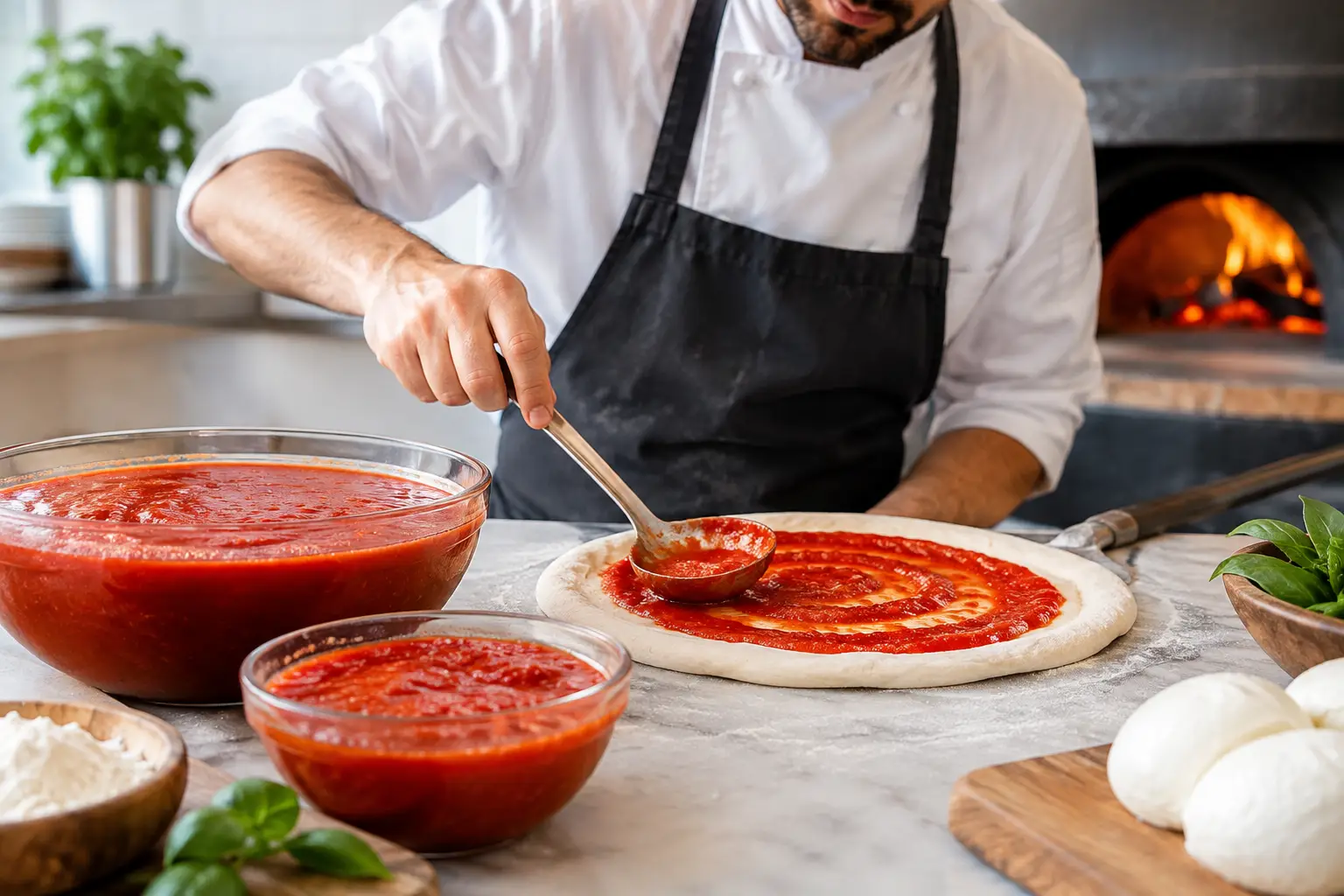
The correct sauce is loose, spoonable, and visibly textured. It should fall from a spoon in a soft ribbon rather than drop in a solid mound or run like tomato water. When you place a ladleful on stretched dough, it should spread with two or three gentle circular motions of the spoon. It should not require pressure, and it should not race toward the cornicione.
Think of the desired texture as crushed tomatoes with enough natural pulp to carry the liquid. You should see small pieces of tomato, but not large chunks that create uneven wet spots. The sauce should look fresh and bright, not dense like a jarred pasta sauce and not perfectly smooth like a thin puree.
A useful test is to spread sauce on one prepared dough round before committing to a full service batch. After spreading, lift the pizza by the edge and make a small, controlled tilt. The sauce should remain generally in place. A small amount of movement is normal. A wave of liquid collecting in the center means the sauce needs adjustment.
Why Sauce Texture Changes the Bake
In a high-temperature Neapolitan oven, every topping affects the way heat reaches the dough. Tomato sauce brings moisture, and moisture absorbs energy before it can evaporate. If too much free liquid is present, the pizza spends its short bake steaming rather than setting.
The result is often mistaken for a dough problem. The center may be soft, gummy, or difficult to lift from the peel. The rim can color before the center has fully baked, tempting the pizzaiolo to leave the pizza in the oven too long. That extra time may over-char the cornicione while the middle remains wet.
Thickness creates a different problem. A dense sauce layer insulates the dough and can keep the tomato flavor concentrated in isolated areas rather than integrating across the pizza. It may also dry on the surface before the cheese has melted properly. In a pizza intended to be light and balanced, sauce should support the dough rather than dominate it.
Consistency also affects handling. A loose sauce can make the topped pizza harder to launch, particularly when the dough is highly hydrated or when a pizza sits too long on the bench. The answer is not always to make the sauce thicker. Often, the better correction is to use less sauce, top more quickly, or improve the drainage of the cheese.
Start With the Tomato, Not a Blender
The tomato determines most of the final consistency. High-quality canned whole peeled tomatoes often provide the most control because you can assess the fruit, pulp, and packing liquid separately. Some cans contain firm tomatoes in a relatively thin juice; others contain heavily broken fruit and excess liquid. Treating every can the same is an invitation to inconsistency.
For a traditional-style sauce, drain only if the can is unusually watery, then crush the tomatoes by hand or pass them briefly through a food mill. Hand crushing preserves an irregular, natural texture. A food mill produces a more even result while still retaining body. Either method can work well when used with restraint.
Avoid aggressively blending the tomatoes. A blender breaks down pulp and seeds, incorporates air, and can create a sauce that looks thicker at first but releases water unpredictably during baking. It can also produce a foamy texture and a flavor that feels less fresh. If a smoother sauce is required for operational consistency, use short pulses rather than extended blending.
Salt should sharpen the tomato, not turn the sauce into a seasoned cooking base. Add it gradually and allow a few minutes for it to dissolve before judging both flavor and texture. Salt draws moisture from tomato solids, so a sauce can loosen slightly after mixing. This is one reason to make the sauce ahead of the first pizza rather than adjusting it during service.
How to Correct Sauce That Is Too Thin
A thin sauce is usually caused by excess packing liquid, overly broken tomatoes, or a tomato product with naturally low solids. Do not solve it by cooking it down if your goal is authentic Neapolitan character. Cooking changes the flavor profile, darkens the tomato, and creates a sauce more suited to other pizza styles.
Instead, start by allowing the sauce to rest in a fine-mesh strainer for a short time. The goal is not to dry out the tomatoes. You are removing excess free liquid while preserving the fresh pulp. Return the drained liquid only if the remaining sauce becomes too dense.
You can also fold in more crushed tomato pulp from the same product. This is preferable to adding paste, which can make the sauce taste heavy, sweet, and overly concentrated. If you are working with a large production batch, measure the drained weight of tomatoes and record the amount of liquid retained. Consistency comes from repeatable ratios, not from visual guesswork alone.
Be cautious with crushed tomatoes sold in puree. Some are excellent, while others are already very fine and loose. A brief drain may be enough. If the product is consistently thin, change the tomato rather than forcing it into shape with thickeners.
How to Correct Sauce That Is Too Thick
A sauce that sits stiffly on the dough needs moisture, but add it with discipline. The best adjustment is reserved tomato liquid from the same can. Add a small amount, mix gently, and reassess. Water can work in an emergency, but it dilutes flavor and may produce a flat-tasting sauce.
If the sauce is thick because the tomatoes are under-processed, crush or mill it a little further. Do not assume thickness equals quality. Large fibrous pieces may prevent an even spread and can create patches where the pizza bakes unevenly.
Some pizzaiolos prefer a slightly thicker sauce when using very wet fresh mozzarella, a lower-temperature oven, or a dough that is especially delicate in the center. That can be a valid operational choice. The trade-off is that a heavier sauce layer can mute the lightness that defines a well-made Neapolitan pizza. Adjust one variable at a time: either thicken the sauce slightly, reduce the sauce weight, or improve cheese drainage. Changing all three at once makes it difficult to learn what actually solved the problem.
Sauce Quantity Matters as Much as Consistency
Even perfectly prepared sauce can overwhelm a pizza when used in excess. For a typical 10- to 12-inch Neapolitan pizza, many pizzaiolos work in the range of 60 to 90 grams of sauce. The ideal amount depends on dough size, tomato solids, cheese moisture, and the style of pizza being made.
A Margherita with fresh mozzarella generally benefits from a measured hand. The mozzarella will release moisture as it heats, so a generous sauce application can push the center past its moisture limit. A Marinara can often accept slightly more sauce because it does not include fresh cheese, but it still needs an exposed border and a clear relationship between tomato and dough.
Spread from the center outward in a spiral, leaving a clean rim. Stop before the sauce becomes a perfectly opaque blanket. Small areas of dough showing through are not a defect. They often indicate that the layer is thin enough to bake properly.
Build a Repeatable Sauce Standard
Professional consistency requires more than an experienced eye. Record the tomato brand, drained weight, salt percentage, processing method, resting time, and portion weight per pizza. When a batch performs well, those notes allow you to reproduce it. When it performs poorly, they help isolate the cause.
Taste and test the sauce under real baking conditions. A sauce that appears correct in a container may behave differently after it meets high-hydration dough, fresh cheese, and intense floor heat. Bake a test pizza whenever you change tomato products, receive a new lot, or alter your dough formula.
The strongest sauce is not the thickest, the smoothest, or the most heavily seasoned. It is the one that allows the dough to rise, the tomato to taste alive, and the finished pizza to remain light in the hand. Train your eye to recognize that balance, then let each bake refine it.