
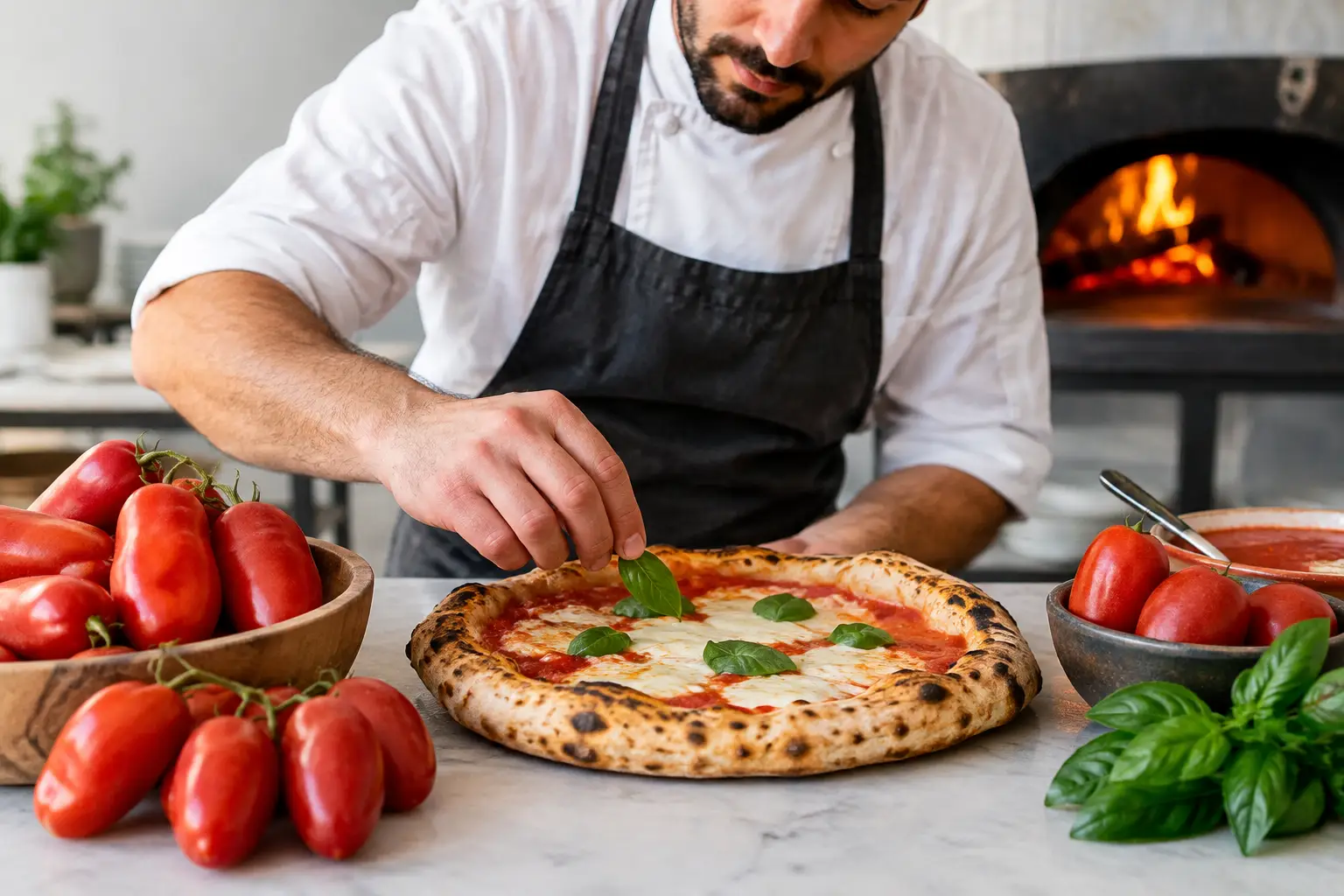
A Neapolitan pizza sauce has very little room to hide. There is no long simmer to soften an aggressive tomato, no heavy seasoning to correct a flat one, and no extended bake to evaporate excess water. That is why the question of San Marzano versus plum tomatoes matters to serious pizzaioli. The choice affects sweetness, acidity, texture, consistency, and how the pizza performs during a 60- to 90-second bake.
The short answer is that San Marzano tomatoes are a type of plum tomato, but not every plum tomato offers the same result. For pizza, the more useful question is not which name sounds more authentic. It is which tomato product gives you a balanced, clean-tasting sauce that stays controlled on the dough and supports the character of the bake.
San Marzano versus plum tomatoes: the real distinction
“Plum tomato” describes a broad category of elongated, meaty tomatoes with relatively few seeds and less water than many round slicing tomatoes. Roma tomatoes are plum tomatoes. Many processing tomatoes used for canned products are plum tomatoes. Their shape and dense flesh make them well suited to sauces, canning, and pizza.
San Marzano refers more specifically to a tomato cultivar associated with the Campania region of Italy. The most protected examples carry the DOP designation, indicating that they were grown, processed, and packed under defined rules in the Agro Sarnese-Nocerino area near Mount Vesuvius. Those tomatoes are usually sold whole and peeled, packed in tomato juice or puree.
That distinction matters because a can labeled “San Marzano style,” “Italian-style,” or even “San Marzano” may not be a DOP product. It may still be excellent. But it is not automatically the same ingredient, grown under the same conditions or held to the same production standard.
For the pizza maker, the label is a starting point, not a verdict. A DOP San Marzano tomato can be beautiful, but a well-packed non-DOP plum tomato may perform better than a poorly handled or overly acidic can bearing a prestigious name.
Flavor: balance is more valuable than sweetness alone
San Marzano tomatoes are prized for a flavor often described as sweet, low in harsh acidity, and distinctly rounded. At their best, they have a savory depth that remains present after a very fast bake. This profile suits Neapolitan pizza because the sauce is used sparingly and stays close to its raw state.
However, “sweet” can be overstated. A pizza sauce should not taste sugary. It should taste ripe, fresh, and complete, with enough acidity to cut through mozzarella, olive oil, and fermented dough. If the tomato is too sweet and low in lift, the pizza can taste dull. If it is sharply acidic or metallic, the sauce may dominate every other component.
Generic plum tomatoes vary more widely. Some are mild and clean but lack complexity. Others are bright and pleasantly acidic, which can work especially well with rich cheeses or toppings such as sausage and mushrooms. Some inexpensive products, however, carry a cooked, tinny, or watery flavor that becomes more obvious in a high-heat oven.
The right choice depends on your dough, cheese, and intended style. A delicate Neapolitan Margherita benefits from a tomato with balance and restraint. A pizza with aged mozzarella or richer toppings may benefit from a slightly brighter plum tomato sauce. Authentic practice is not about forcing one can into every menu application. It is about understanding the ingredient well enough to use it correctly.
Texture determines how the sauce behaves on the pizza
Texture is where many sauce problems begin. Whole peeled San Marzano tomatoes are generally soft-fleshed and easy to crush by hand. When properly packed, they break down into a sauce with body but without large, wet chunks. This is valuable for Neapolitan pizza, where the sauce must spread easily in a thin layer and bake without flooding the center.
Plum tomatoes can range from dense and pulpy to loose and watery. Some brands include a heavy puree that produces an overly thick sauce. Others use a thin packing juice that needs to be drained or blended carefully. Neither condition makes the tomatoes unusable, but both require adjustment.
Avoid treating every can the same way. Open it and assess the fruit. Are the tomatoes intact? Is the liquid bright and clean, or thick and pasty? Does the tomato crush into a cohesive pulp, or does it separate into firm pieces and water? These details tell you more about pizza performance than the front label alone.
For a classic Neapolitan application, hand-crushing is often the best first method. It preserves a natural, slightly irregular texture and avoids incorporating too much air. An immersion blender can be useful when a product is especially chunky, but blend briefly. A foamy, fully liquefied sauce tends to spread too thinly and can release water during baking.
What DOP certification does and does not guarantee
DOP San Marzano tomatoes offer traceability and a connection to a specific agricultural tradition. For a pizza operation built around heritage, that has real value. The product provides a meaningful ingredient story, and the flavor profile can be exceptional when the tomatoes are handled well.
But certification does not remove the need for quality control. Canned tomato flavor changes by harvest, storage conditions, and production batch. One lot may be vibrant and balanced; another may be softer, saltier, or more acidic. Professional pizza makers taste every product they use, regardless of origin.
A DOP label also does not mean the sauce should be complicated. If you begin with excellent whole peeled tomatoes, the traditional approach is remarkably restrained: crush the tomatoes, add salt as needed, and use the sauce fresh. Some pizzaioli add basil or a small amount of olive oil, depending on the pizza and the house standard. Garlic, sugar, onion, dried herbs, and long cooking are not corrections for weak technique. They are different stylistic choices.
Choosing tomatoes for Neapolitan pizza
When comparing San Marzano and other plum tomatoes, evaluate the can with the finished pizza in mind. A useful product should have ripe tomato aroma, clean flavor, moderate liquid, and enough pulp to remain where you place it. It should not leave a watery ring around the cornicione or turn into a heavy paste under the cheese.
Taste the tomato before seasoning it. Then make a test pizza with your actual dough, mozzarella, oven temperature, and bake time. A tomato that seems mild from the spoon can become assertive after baking. A sauce that tastes perfect at room temperature may become watery when paired with a high-moisture cheese.
Pay close attention to salt. Canned tomatoes vary considerably, and pizza sauce is applied in a small quantity. Underseasoning can make even fine tomatoes seem bland, while oversalting becomes pronounced once the pizza loses moisture in the oven. Season in small increments and test again.
Portion control is equally important. For a 10- to 12-inch Neapolitan pizza, the sauce should cover the center without forming a deep layer. The exact amount depends on the tomato’s moisture and the hydration of the dough, but more sauce is rarely the answer. A properly fermented dough and a powerful oven reward balance, not excess.
When a plum tomato may be the better choice
A high-quality plum tomato can be the better operational choice when you need dependable supply, consistent cost, or a sauce profile designed around your menu. This is particularly relevant for restaurant founders building systems that must work across multiple deliveries, staff members, and seasons.
If a non-DOP plum tomato gives you cleaner consistency and produces better pizzas in your oven, use it with confidence. The goal is not to win an argument at the shelf. The goal is to produce pizza that honors the discipline of the style: a light, well-baked crust, controlled toppings, and a tomato sauce that tastes alive rather than processed.
For students of the craft, compare two products side by side. Crush each by hand, season them identically, and bake them on the same dough with the same cheese. Notice the aroma, spread, moisture, and finish. That one exercise will teach more than any front-label claim. A great pizza begins with respect for ingredients, but it is completed through judgment.