
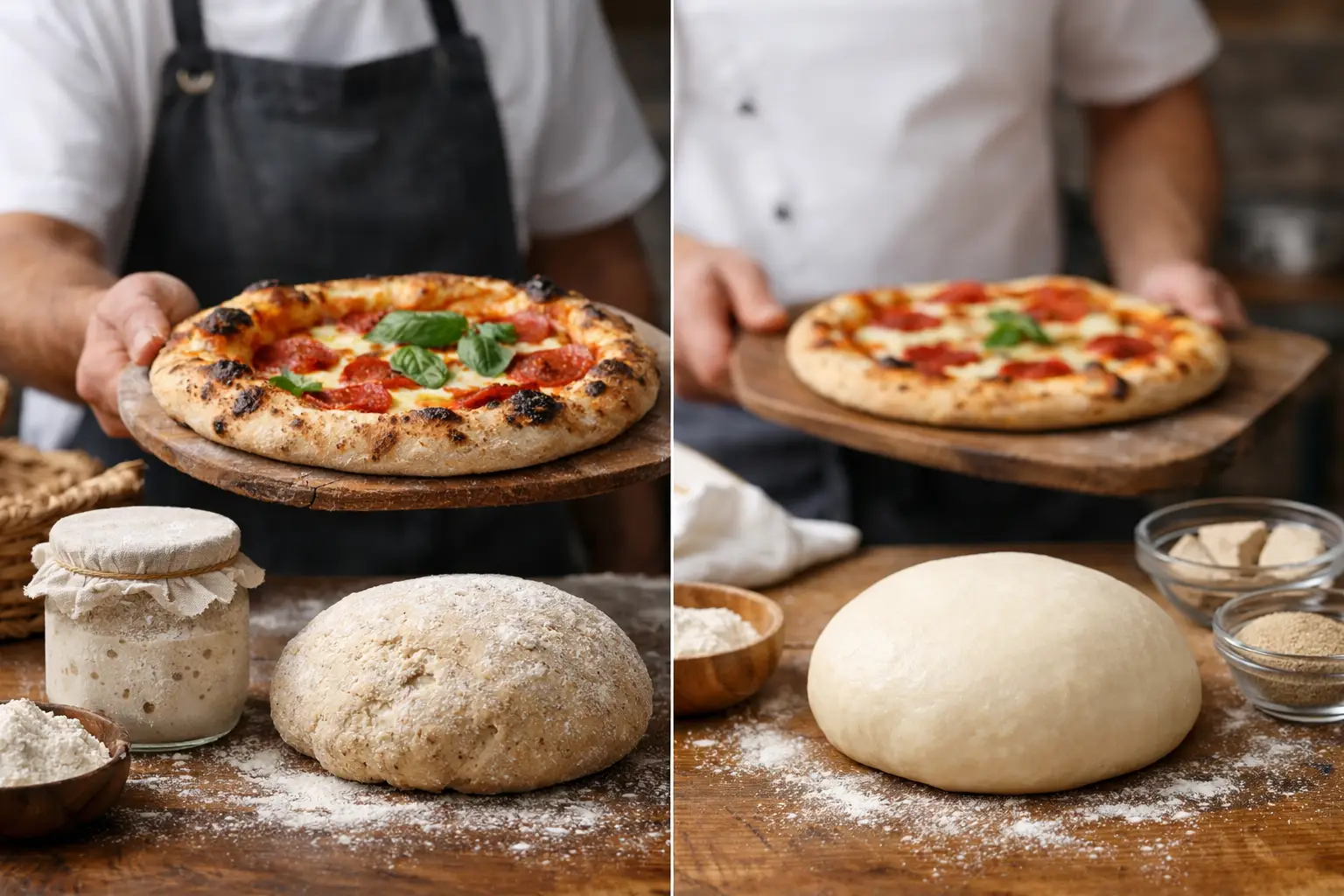
A pizza dough that opens beautifully at 1 p.m. can become sticky, acidic, and difficult to manage by dinner service. That practical reality is at the center of sourdough versus commercial yeast pizza. The question is not which leavening method sounds more artisanal. It is which method gives you the flavor, fermentation control, dough strength, and production rhythm your pizza requires.
For Neapolitan-style pizza, leavening is only one part of a larger system. Flour strength, water temperature, dough temperature, salt, fermentation time, ball management, opening technique, and oven performance all affect the finished pie. A starter or a pinch of yeast cannot compensate for weak dough handling or poor fermentation planning.
Sourdough Versus Commercial Yeast Pizza: The Real Difference
Commercial yeast is a selected strain of Saccharomyces cerevisiae. It is valued because it produces carbon dioxide predictably, allowing dough to rise with relatively consistent timing when temperature, dosage, and formula are controlled. Fresh, active dry, and instant yeast differ in handling, but they serve the same fundamental role: dependable fermentation.
Sourdough culture contains wild yeasts alongside lactic acid bacteria. Those microorganisms create gas, but they also produce organic acids and a wider range of fermentation byproducts. This is why a well-managed sourdough dough can develop a more layered aroma and a gentle tang. It is also why it demands greater attention. A starter is a living culture whose behavior shifts with feeding schedule, flour choice, hydration, maturity, and ambient temperature.
Neither method automatically produces better pizza. Commercial yeast can make deeply flavorful dough when it is given sufficient fermentation time. Sourdough can make bland, overly sour, or poorly structured dough when the culture is unbalanced or the fermentation is pushed too far. The finished pizza is the result of control, not the label attached to the leavening.
Flavor: Complexity Versus Clarity
Sourdough is often chosen for flavor, and for good reason. In a properly fermented dough, it can contribute aromas that suggest grain, yogurt, fruit, or mild fermentation. The acidity can add dimension to a simple pizza topped with tomato, mozzarella, basil, and olive oil. When the crust is baked in a hot oven, those fermentation notes can be especially appealing against the charred, lightly bitter edge of the cornicione.
But sourness is not the goal. In Neapolitan-style pizza, the dough should support the toppings rather than announce itself with aggressive acidity. Excessive sourness can compete with tomato and cheese, while a sharp aroma may signal a starter that was used too late, fermented too warm, or carried with too much acid load.
Commercial yeast usually produces a cleaner flavor profile. That does not mean a flat one. A 24- to 48-hour fermentation, managed at appropriate temperatures, can yield a fragrant dough with sweetness, wheat character, and a balanced baked aroma. For many traditional-minded pizzaiolos, this clarity is an advantage. It lets the quality of the flour, tomato, mozzarella, and bake remain distinct.
The decision comes down to the flavor you want to build. Choose sourdough when you can maintain a healthy culture and want subtle fermentation complexity. Choose commercial yeast when you want a clean, classic profile with fewer variables.
Fermentation Control Matters More Than Romance
A commercial-yeast dough is easier to schedule. Once you know your yeast percentage, dough temperature, and fermentation environment, you can plan when the dough will be ready to divide, ball, open, and bake. This predictability matters at home, but it becomes essential in a restaurant where service timing cannot depend on a starter having an unusually active day.
Sourdough introduces more moving parts. The starter must be refreshed consistently and used at the right stage of maturity. Use it too young, and it may lack leavening power. Use it too late, and it may bring excessive acidity and proteolytic activity, weakening the dough structure. A starter that performs well in a cool home kitchen may behave very differently in a warm production space.
Temperature is the common language between both methods. Dough temperature influences fermentation speed, extensibility, gas retention, and final flavor. Serious pizza makers measure it rather than guess. If a dough is mixed too warm, it can race ahead of the schedule. If it is too cool, it may remain tight and underproofed when it is time to open.
For a first-time pizza operator, commercial yeast usually offers the more manageable route to consistency. For an experienced baker with a disciplined refreshment routine and a stable production environment, sourdough can be integrated successfully. The key is to build the process around the culture, not force the culture into an unrealistic schedule.
Dough Strength and Handling at the Bench
Neapolitan-style dough must be extensible enough to open by hand while retaining enough strength to hold gas and form a raised rim. This balance is delicate. It becomes even more important when the pizza will bake rapidly in a very hot oven.
Commercial yeast generally places fewer acid-related demands on gluten development. With appropriate mixing and fermentation, the dough can remain smooth, elastic, and easy to shape. That makes it a practical choice for students learning to feel proper fermentation through the fingertips: soft but not slack, airy but not fragile.
Sourdough acidity can increase extensibility, which may help dough open with less resistance. Taken too far, however, acid and enzymatic activity weaken the gluten network. The result is a dough ball that spreads too quickly, tears at the center, clings to the bench, or lacks the strength to trap the gases needed for an open cornicione.
This does not make sourdough unsuitable for pizza. It means formula and process must be adjusted carefully. A sourdough pizza maker may need to use a lower inoculation, shorten or cool the fermentation, select flour with appropriate strength, or manage the starter to keep acidity in check. These are technical choices, not stylistic details.
What Tradition Actually Requires
Sourdough is often described as more authentic because it is natural. That claim is too simple. Pizza tradition has never been frozen in one fermentation method, and commercial baker's yeast has long been part of professional baking. Authenticity in Neapolitan pizza is expressed through the complete craft: a restrained dough formula, proper fermentation, hand opening, balanced topping application, and rapid baking that produces a soft center and developed rim.
A pizza made with commercial yeast can be faithful to Neapolitan principles. A pizza made with sourdough can also be excellent, provided its acidity and texture remain in harmony with the style. Using starter does not grant technical credibility on its own. The standard is in the execution.
For anyone pursuing formal Neapolitan methods, begin with the dough system you can repeat accurately. Learn how a properly fermented ball should look, feel, and respond on the bench. Once those fundamentals are reliable, experimenting with a mature sourdough culture becomes far more productive.
Choosing the Right Method for Your Pizza Program
Commercial yeast is usually the stronger choice when you need consistent results, are still developing dough skills, operate on a fixed service schedule, or want a clean classic flavor. It is especially useful for training because it reduces one major source of variation while you learn mixing, fermentation observation, shaping, and baking.
Sourdough may be the right choice when you already maintain a vigorous, predictable starter and have the discipline to monitor it daily. It can differentiate a pizza program, but only if the added complexity produces a better pie rather than an inconsistent one. Restaurant founders should also consider staffing: a sourdough program needs documented refreshment procedures, temperature control, and team members who can recognize when the culture or dough is off course.
Some pizzaiolos use a hybrid approach, combining sourdough culture with a small amount of commercial yeast. This can provide some flavor contribution from the culture while adding insurance for fermentation timing. It is a legitimate technical option, although it still requires careful testing. Hybrid dough is not a shortcut around fermentation knowledge.
The most useful test is practical. Make comparable doughs with the same flour, hydration, salt, dough weight, topping style, and bake. Change only the leavening system. Evaluate not just flavor, but how each dough mixes, matures, opens, launches, and performs through the full service window. Notes from repeated bakes will tell you more than assumptions about which method is supposed to be superior.
A great pizza dough should make the pizzaiolo more capable, not more dependent on luck. Build the fermentation process you can measure, repeat, and refine. From that foundation, every pie has a better chance of honoring the discipline behind Neapolitan pizza.