
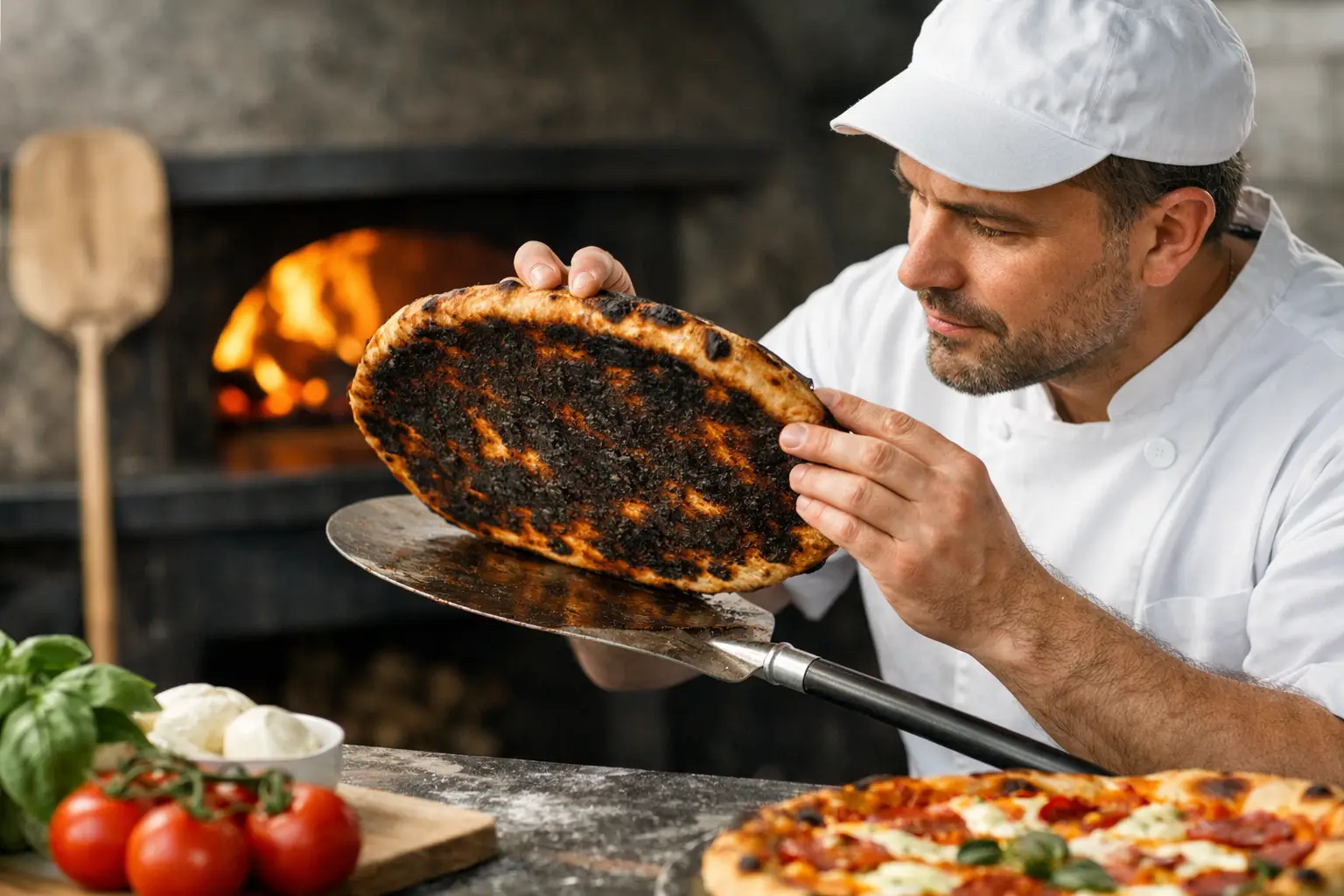
A pizza with a blackened underside and pale, underfinished top is not simply “overcooked.” It is a heat-balance problem. If you are asking, why is pizza bottom burnt when the rim and toppings still need time, the answer usually lies in the relationship between the oven floor, the flame or upper heat, the dough, and the way the pizza was launched.
For Neapolitan pizza, the bottom should show an even pattern of brown spotting and light char, not a continuous bitter black layer. A properly baked pizza comes from intense heat working in concert: conduction from the oven floor sets the base, radiant heat from the dome develops the cornicione, and live flame finishes the top. When one source gets ahead of the others, the bake loses its balance.
Why Is Pizza Bottom Burnt in a Hot Oven?
The most common cause is an oven floor that is too hot for the available top heat. The floor transfers heat directly into the dough from the moment of launch. This is conduction, and it is fast. The dome, flame, or upper heating element must keep pace by cooking the rim, cheese, and toppings before the base crosses from well-colored to burnt.
In a wood-fired Neapolitan oven, this imbalance often develops after several pizzas. The fire has been pushed hard, the floor has accumulated heat, and the flame may have weakened or shifted too far from the pizza. The next pizza lands on a deck that is hotter than the dome can support. Its bottom darkens in seconds while the top lags behind.
A similar issue occurs with home pizza ovens. A stone or steel can be fully preheated, while the top burner, broiler, or upper element does not provide enough radiant energy. Steel is especially effective at transferring heat. That makes it valuable for oven spring and crispness, but unforgiving if the top of the pizza is not receiving equally aggressive heat.
The correction is not always to lower the oven temperature. In a Neapolitan-style bake, high heat is essential. Instead, manage the ratio of floor heat to top heat. Rebuild the flame, allow the floor to recover more evenly, move the pizza closer to the flame when appropriate, and turn it consistently. In a home oven, position the baking surface higher, use the broiler strategically, or choose a stone rather than steel if the bottom repeatedly races ahead.
Check the Floor, Not Just the Oven Display
An oven’s thermostat or air-temperature reading does not tell you the temperature of the baking surface. The floor may be substantially hotter or cooler than the air around it. An infrared thermometer is useful, but it should support observation rather than replace it. Watch the bake itself.
If the underside blacks before the rim develops, the floor is too aggressive for your current setup. If the crust remains blond and soft while the top cooks quickly, the floor is too cool. The target is a base that colors at the same pace as the upper structure of the pizza.
Excess Flour Turns Bitter on the Pizza Bottom
Burnt flour is frequently mistaken for burnt dough. The distinction matters because the solution is different. A pizza may emerge with a properly baked base but carry black, acrid patches created by bench flour left on its underside.
During stretching and launching, flour collects in the center of the peel, clings to damp portions of dough, and falls onto the oven floor. In a very hot oven, that loose flour burns almost immediately. It then adheres to the pizza as it is turned or moved across the deck.
Use only enough flour to prevent sticking. For a classic Neapolitan workflow, a light dusting of flour is often preferable to a heavy bed of flour or semolina. Semolina can improve peel movement in some home setups, but it also burns readily at Neapolitan temperatures and can create a gritty underside when overused.
Before launching, lift the stretched dough gently and brush or shake away excess flour. Once the pizza is on the peel, give it a short movement check. If it slides, it is ready. If it does not, solve the sticking issue with technique and speed, not another handful of flour.
Keep the oven floor clean between pizzas as well. A small amount of carbonized flour can become a large problem during a busy service. Move embers and debris away from the baking zone with an oven brush, then let the floor settle briefly before the next launch.
Dough Can Make the Bottom Burn Faster
Not every burnt bottom is an oven-management issue. Dough fermentation, formula, and handling influence how quickly the base colors.
A dough with more residual sugars can brown very quickly. This may happen when dough is over-fermented, when a formula includes sugar or malt, or when fermentation conditions do not match the intended schedule. Traditional Neapolitan dough generally relies on flour fermentation rather than added sugar. In an extremely hot oven, added sweeteners offer little benefit and can push the bottom toward scorching.
Hydration also changes the bake. A lower-hydration dough may set and color quickly because there is less water to absorb heat and delay browning. A very wet dough may seem safer, but if it is poorly fermented or overloaded with wet toppings, it can force a longer bake that eventually burns the bottom anyway. The objective is not simply more or less water. It is a dough strength, fermentation profile, and hydration level that matches your flour and oven.
Thickness matters too. A pizza stretched too thin in the center has little insulation against the deck. The base may burn before the rim expands fully, particularly if the pizza is held too long on one spot of the floor. Stretch with a defined central disk, but do not press the dough to transparency.
Topping Choices Can Delay the Top
A restrained Neapolitan topping pattern is not only traditional. It is functional. Too much sauce, cheese, or moisture slows the cooking of the upper surface. The pizzaiolo then leaves the pizza on the floor longer to finish the top, and the bottom pays the price.
Fresh mozzarella should be properly drained. Tomatoes should be balanced rather than piled on. Dense vegetables, cured meats, and other toppings need thoughtful preparation because they can block radiant heat and release water during the bake. A pizza with a light, even topping load can finish quickly enough to preserve the base.
This is why a plain marinara and a heavily topped specialty pizza should not always receive identical treatment. The heavier pizza may need a slightly less aggressive floor, more active flame, or a different position in the oven.
A Practical Diagnostic Order for Burnt Bottoms
When troubleshooting, change one variable at a time. Lowering the temperature, changing flour, altering hydration, and adding more toppings all at once makes it impossible to identify the real cause. Start with the clues that appear on the finished pizza:
- A uniformly black underside with a pale top points to excessive floor heat or insufficient upper heat.
- Black specks and a bitter, dusty taste point to excess flour on the dough or oven floor.
- A dark bottom with a wet center points to overloaded or poorly drained toppings.
- Fast browning across every pizza, even in a balanced oven, suggests a dough formula or fermentation issue.
- A burn concentrated on one side often points to uneven floor temperature, poor turning, or a pizza left too long near a hot zone.
Make a controlled adjustment for the next pizza. In a live-fire oven, restore a lively flame and choose a slightly cooler area of the floor. In an electric oven, reduce the baking surface’s heat exposure or increase top heat. Brush excess flour away, use a lighter hand during launch, and observe whether the pattern changes.
The Goal Is Leopard Spotting, Not Black Crust
Authentic Neapolitan pizza is allowed to show character. Small dark spots on the base and cornicione are normal results of high-temperature baking, and they contribute toasted flavor. But char should remain part of a balanced crust, never dominate it.
The strongest pizzaiolos learn to read the oven continuously: the condition of the flame, the color of the floor, the speed of the first rise, the way cheese melts, and the pattern forming beneath the pizza. Treat each bake as information. When the floor, flame, dough, and topping load are working at the same pace, the bottom will tell you not that it burned, but that the pizza was properly made.