
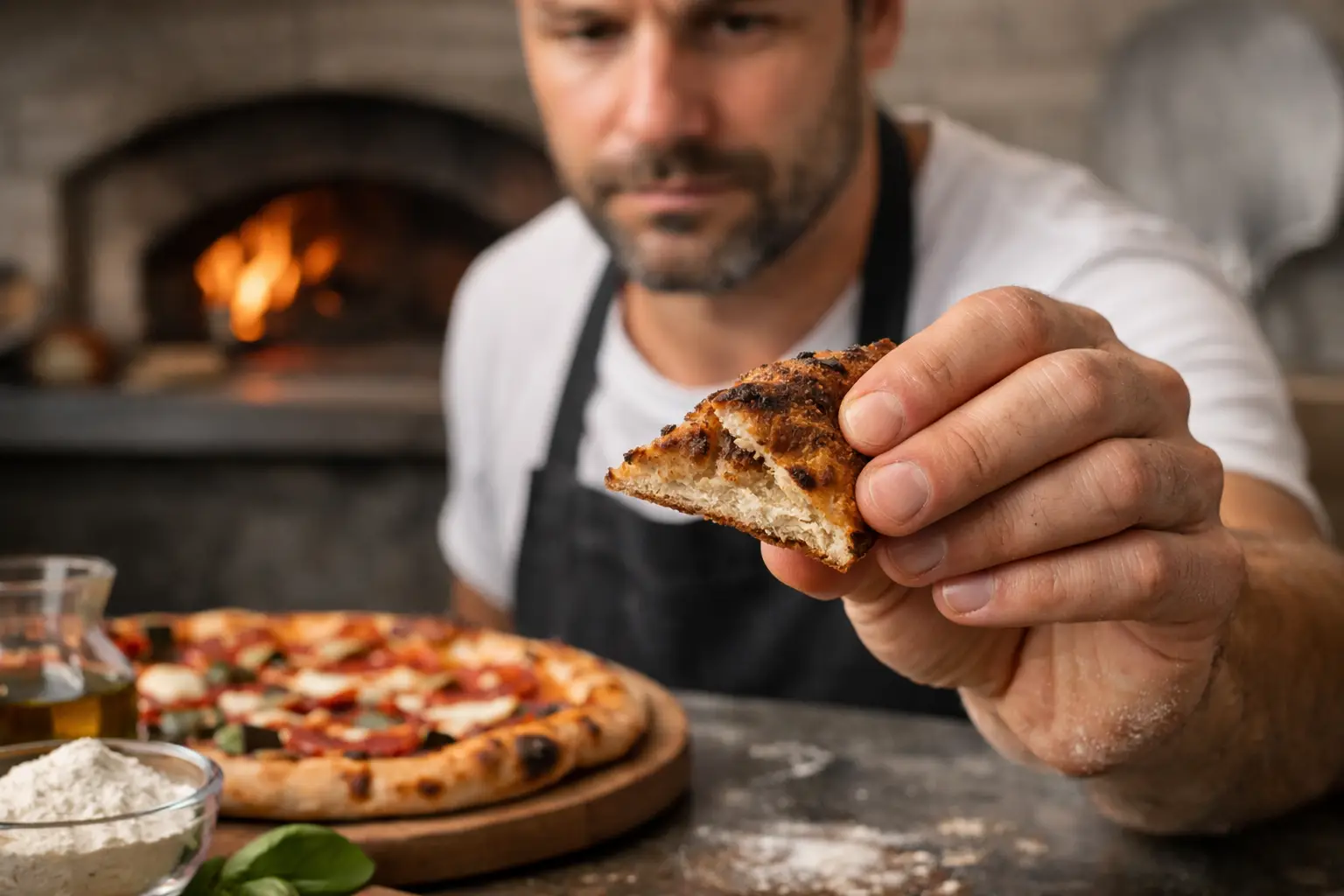
You pull a pizza from the oven, cut into the rim, and instead of a light, tender bite, you get resistance. If you have been asking why is pizza crust tough, the answer is usually not one single mistake. Tough crust is what happens when dough structure, fermentation, shaping, and baking fall out of balance.
For serious pizza makers, that distinction matters. A Neapolitan-style crust should have strength, but it should not feel leathery, dense, or difficult to chew. Good crust has elasticity and openness. Tough crust has excessive resistance. The difference comes from technique more than luck.
Why is pizza crust tough in the first place?
Tough pizza crust usually comes from too much gluten strength, too little fermentation, moisture loss, or a bake that does not match the dough system. In practical terms, that means the dough may have been overmixed, underproofed, degassed during shaping, baked too long, or made with a flour and hydration level that do not suit the method.
Many bakers assume chewiness automatically means quality. That is not always true. In pizza, especially in the Neapolitan tradition, the crust should offer slight resistance and then give way easily. When the bite feels tight, dry, or rubbery, the dough was pushed too far in the direction of strength and not far enough toward maturity.
The most common dough reasons pizza crust turns tough
The first issue is often flour choice. High-protein flour can be useful, but more protein is not always better. A stronger flour builds a stronger gluten network, and if the rest of the process does not support proper fermentation and extensibility, the finished crust can become overly chewy. This is one reason bakers moving from bread formulas into pizza often end up with a crust that feels heavy.
Mixing is another major factor. Dough needs development, but not endless kneading. When you mix too aggressively or too long, gluten becomes overly tight. The dough may look smooth and impressive in the bowl, yet bake into a crust with too much resistance. In pizza production, especially for styles that rely on oven spring and a delicate cornicione, restraint matters.
Hydration also plays a role. A drier dough tends to bake firmer and can toughen quickly, particularly in home ovens where bake times are longer than they would be in a high-temperature pizza oven. If the dough does not contain enough water, the finished crust can lose tenderness before the interior structure has a chance to expand properly.
Salt deserves mention too. It strengthens gluten and controls fermentation, which is exactly why it belongs in pizza dough. But when a formula is already strong and fermentation is not well managed, salt can contribute to an even tighter dough. This is not an argument against salt. It is a reminder that every variable works in relation to the others.
Fermentation problems that create a hard bite
Underfermented dough is one of the most common answers to why is pizza crust tough. If the dough has not matured long enough, the gluten remains too tight and the internal gas structure remains underdeveloped. The crust may puff somewhat in the oven, but it will often eat dense and tight rather than light and tender.
This is where many home pizza makers get misled. A dough ball can double in size and still not be truly ready. Fermentation is not only about visible rise. It is also about biochemical change. Time allows the dough to relax, develop aroma, and become more extensible. Without that maturity, you may get volume without real softness.
Overfermentation can also cause problems, though in a different way. Extremely overproofed dough weakens, dries on the surface, and can bake unevenly. In some cases the crust becomes tough not because the dough is too strong, but because it has lost balance and moisture. So the goal is not maximum fermentation. The goal is controlled fermentation suited to your flour, temperature, and schedule.
Shaping mistakes that tighten the crust
A well-fermented dough can still become tough if you handle it poorly. The biggest shaping mistake is pressing out too much gas from the outer rim. In Neapolitan pizza making, the edge is not flattened aggressively. That preserved gas is part of what creates a light, open, tender cornicione.
If you use a rolling pin, you compress the dough structure dramatically. That alone can lead to a firmer, less airy crust. Hand stretching is not just traditional theater. It protects the internal structure you spent hours building.
Another issue is fighting the dough. If the dough snaps back hard during opening, that is a sign it is too tight, often from underproofing or excessive gluten development. Forcing it into shape usually makes things worse. The crust may bake up small, dense, and chewy. Dough that is properly matured should open with much less resistance.
Baking conditions can make a good dough feel tough
Even solid dough can turn tough in the oven if the bake is mismatched to the style. This happens often in home setups. Neapolitan dough is designed for very high heat and a short bake. When that same dough is baked at a lower temperature for too long, moisture loss increases and the crust can become dry and leathery.
That does not mean you cannot make excellent pizza at home. It means your dough formula and bake strategy must reflect your oven. A home oven often benefits from adjustments in hydration, dough weight, fermentation planning, and bake surface. If you try to force a true 90-second oven result from a lower-temperature environment, the texture will usually suffer.
Excess flour on the peel can contribute as well. Burned bench flour on the bottom creates bitterness and a rougher texture, but it can also give the crust an overall drier feel. The same goes for overbaking. A minute too long may not sound serious, yet in pizza it can be the difference between supple and tough.
Toppings and sauce affect crust texture too
Dough is the foundation, but toppings influence the final bite. A pizza loaded with low-moisture cheese, heavy sauce, or too many ingredients can bake unevenly. In some cases the center remains wet while the outer crust overbakes and toughens.
Balance matters. Traditional Neapolitan pizza is disciplined in topping quantity for a reason. The dough must be able to bake cleanly and quickly. When the topping load is excessive, the baker often extends the bake to compensate, and the rim pays the price.
Sauce composition is another factor. A very thick or reduced sauce can limit moisture movement differently than a lighter crushed tomato base. There is no single rule here, but there is a clear principle: dough, topping load, and oven conditions have to work together.
How to fix a tough pizza crust
Start by looking at your process in sequence rather than changing everything at once. If your flour is very strong, consider whether it actually fits your fermentation timeline and oven. If your dough feels tight after mixing, reduce mixing intensity or stop earlier. If your dough balls resist opening, extend fermentation or give them more time to relax at room temperature before shaping.
Then examine hydration honestly. Many tough crust problems come from dough that is simply too dry for the bake environment. A modest increase in water can improve tenderness, but only if your handling skills and flour can support it.
Next, protect the rim during shaping. Open the dough with your hands, leave the outer edge intact, and avoid pressing out all the gas. If the dough keeps shrinking back, do not force it and assume the problem is shaping technique alone. Resistance usually points back to development and proofing.
Finally, adapt the bake to your oven. In a lower-temperature home oven, use a properly heated stone or steel, minimize unnecessary bake time, and avoid overdrying the crust. If your oven cannot reproduce a true high-heat Neapolitan environment, the solution is not frustration. It is adjusting the dough system intelligently.
What a properly made crust should feel like
A good pizza crust should not be soft in the sense of weakness, and it should not be chewy in the sense of labor. It should have structure without toughness, color without dryness, and enough elasticity to hold its shape while remaining easy to bite through.
That is the standard serious pizza makers should aim for. Not just a crust that looks right in photos, but one that reflects control of flour, fermentation, shaping, and bake. At Neapolitan Pizza School, this is exactly how we teach dough evaluation: not by isolated tricks, but by understanding cause and effect across the whole process.
If your crust is tough, treat it as useful feedback. Dough is telling you where the balance is off, and once you learn to read that signal, better pizza becomes much more repeatable.